Seed to Canopy: How We Track the Entire Journey

Every rainforest tree has a story - and at ClimateForce, we’re dedicated to following that story from the very beginning. Our Seed to Canopy Journey program represents one of the most comprehensive and data-driven approaches to ecosystem restoration anywhere.
By tracking each seed from the moment it is collected, through germination and planting, and into maturity, we gain powerful insights into what works - and how we can improve the science of large-scale rainforest regeneration.
It Starts With the Seed
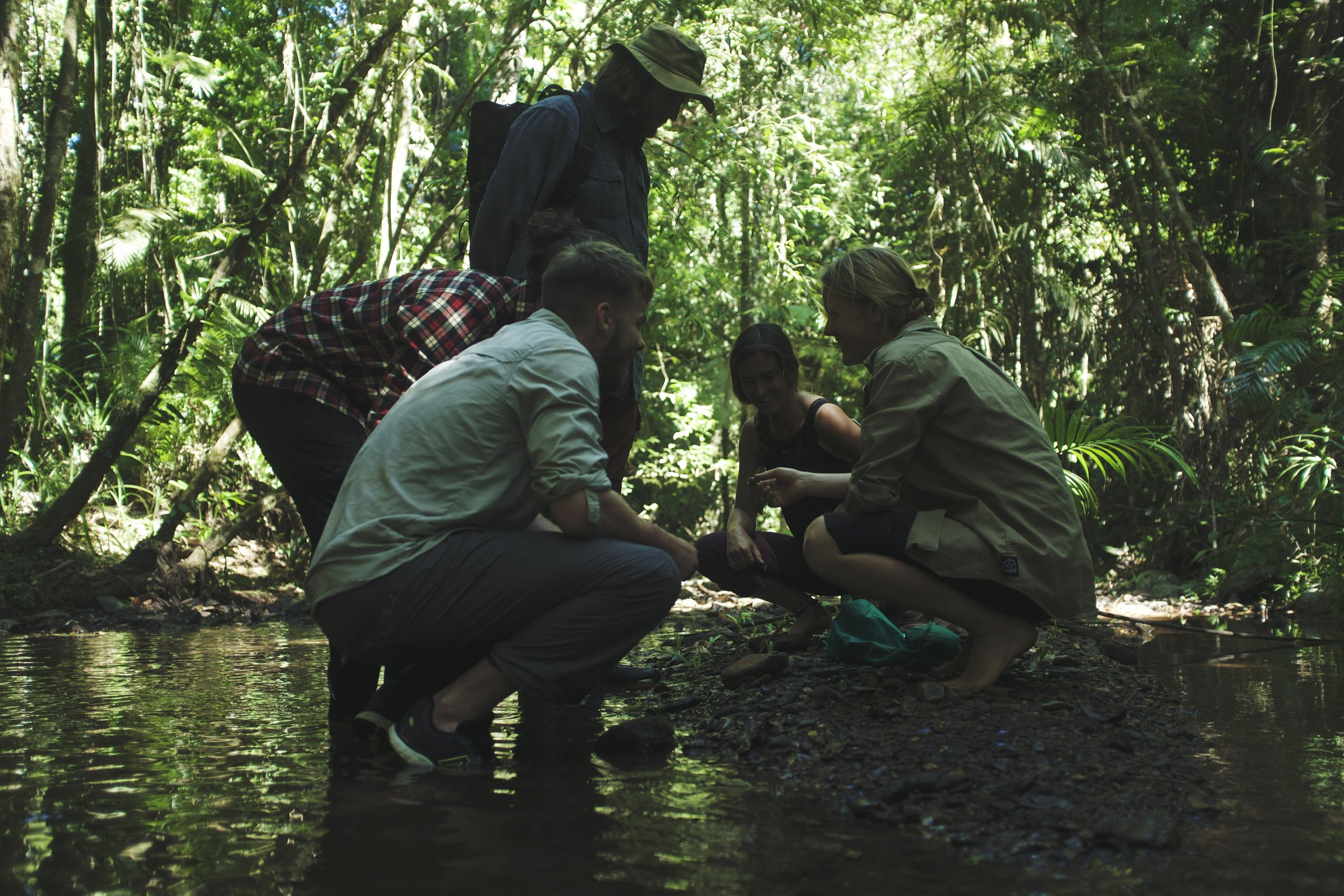
The journey begins with ethical seed collection on private lands and conservation properties. For every seed batch, our field team records:
GPS location of collection site
Date of collection
Species and quantity collected
This careful documentation ensures that we maintain transparency, traceability, and data integrity from the very first step of the restoration process.
Tracking Every Stage of Growth
Once collected, seeds enter our propagation program:
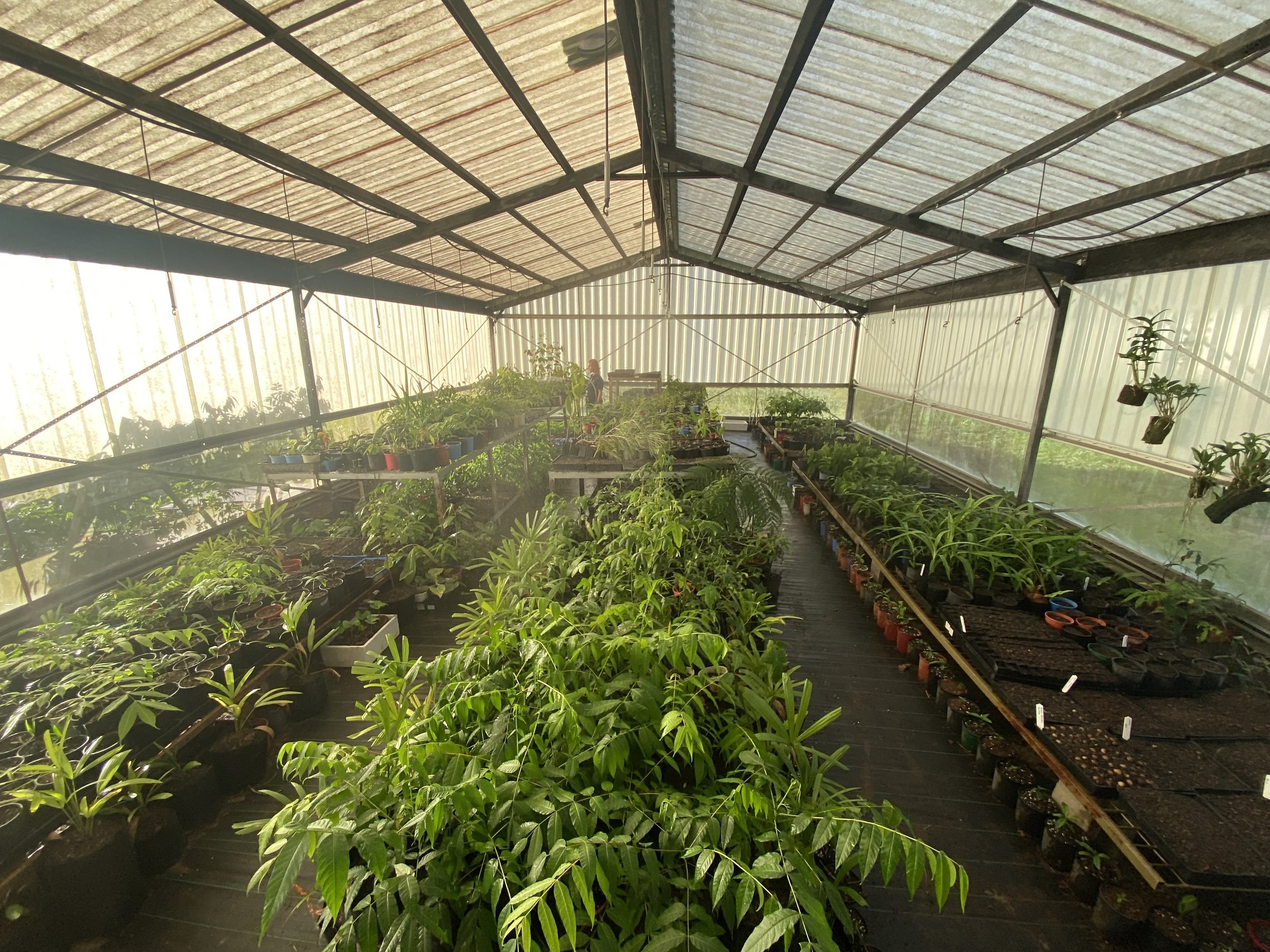
Germination Stage: Seeds are tracked as they sprout and develop under nursery conditions. We monitor germination rates and document any early-stage mortality or abnormalities.
Transplanting Stage: As seedlings grow stronger, they are moved to larger containers or field-ready conditions, with continued monitoring for robustness and species performance.
Planting Stage: At the right time, seedlings are carefully transported and planted at restoration sites, where their exact location and species identity are recorded.
This continuous tracking allows us to share detailed data along the entire journey from seed to planted tree.
Long-Term Monitoring: Beyond the Planting
At ClimateForce, planting is only the beginning. What matters most is how these trees survive and contribute to the wider ecosystem over time.
Our long-term monitoring includes:
Mortality tracking: Our field team assesses each row and plot to record survival rates.
Canopy development measurements: We analyse how quickly and effectively species contribute to creating multi-layered canopy structures.
Species-specific robustness: Some species naturally outperform others; our data helps identify which ones thrive under specific conditions.
Ecosystem influence: We assess how individual species contribute to the overall health and diversity of the restoration system.
This approach gives us an unrivalled understanding of the dynamics of tropical rainforest recovery—and it informs every subsequent restoration phase.

Why It Matters: Data-Driven Restoration
The Seed to Canopy Journey does more than document our work.
It builds predictive knowledge of which species combinations are most resilient. Using field data and drone-based monitoring, we are identifying which species, and which combinations of species, perform best under particular tropical conditions. This reduces trial and error in planting design, improves survival and canopy closure rates, and helps us prioritise species with high ecological value and resilience.
It also offers guidance for restoration projects elsewhere. By documenting every stage, from seed collection and nursery development to site preparation and growth monitoring, we are building a model that others can replicate. Whether the forest being restored is in Queensland or the Amazon, it provides frameworks for efficient planting, weed and pest management strategies backed by data, and adaptable templates that respond to conditions in the field.
Finally, it provides accountability and transparency for our partners, funders and landholders, with clear visibility into what has been planted, how it is growing and what is being learned.
By connecting seed collection to long-term impact assessment, we are building a genuinely evidence-based model for regenerative restoration.

The Future of Rainforest Restoration
At ClimateForce, we see in every seed the potential to reshape a landscape. Regeneration does not happen in isolation, though. It comes from the close connection between planning, planting, monitoring and adaptive response. Every action, from choosing a species to the moment its canopy closes overhead, forms part of an integrated feedback loop. Our aim is that no labour is wasted, no insight overlooked and no tree planted without purpose.
As we extend our restoration work across diverse tropical landscapes, this system will continue to evolve, shaped by data, field experience and collaboration with communities and landholders. The next phase includes:
Analysis of our drone-based monitoring for enhanced canopy analytics. These include Canopy Height Models, vegetation volume estimation, gap closure timelines, and species-specific crown differentiation. This allows us to quantify success not only in survival rates—but in ecological function and habitat development.
Real-time digital data sharing with landholders and stakeholders. Live data access for landholders, researchers, and partners is sessential. Whether it’s rainfall data, canopy growth metrics, or weed management outcomes, stakeholders will have near real-time visibility into how each site is progressing.
This creates a new level of transparency and trust—crucial for funding models, impact verification, and collaborative land management.
Refinement of species selection algorithms based on long-term field data. By layering long-term growth data with microclimate feedback, we are enhancing our species selection tools. This helps us predict not just what grows well—but what grows best in particular zones, with the most regenerative return on investment (ROI).
These refinements are key to maximising functional biodiversity, optimising planting density, and reducing resource waste.