
Four Systems, One Platform
Land-IP is the practical tool built to enable sustainable land productivity and generational prosperity from the soil up
Potentials to Delivery
USER FRAMEWORK
Enabling land managers to confidently map potential, unlock capacity, and secure stronger returns.
Integrated Systems
A Blended Approach
Every property has its best country and the blocks that struggle. By seeing how niche cropping, silvopasture, agroforestry and native regeneration can work side by side, no single paddock has to carry the weight of the farm.
We make sure the capital, labour, and risk are fully worked out before anything happens on the ground, so it fits your pocket and your daily routine perfectly. When these systems support one another, the benefits of shade, shelter and soil health feed the whole place. We’re here to help enable the right decision for what is ahead.
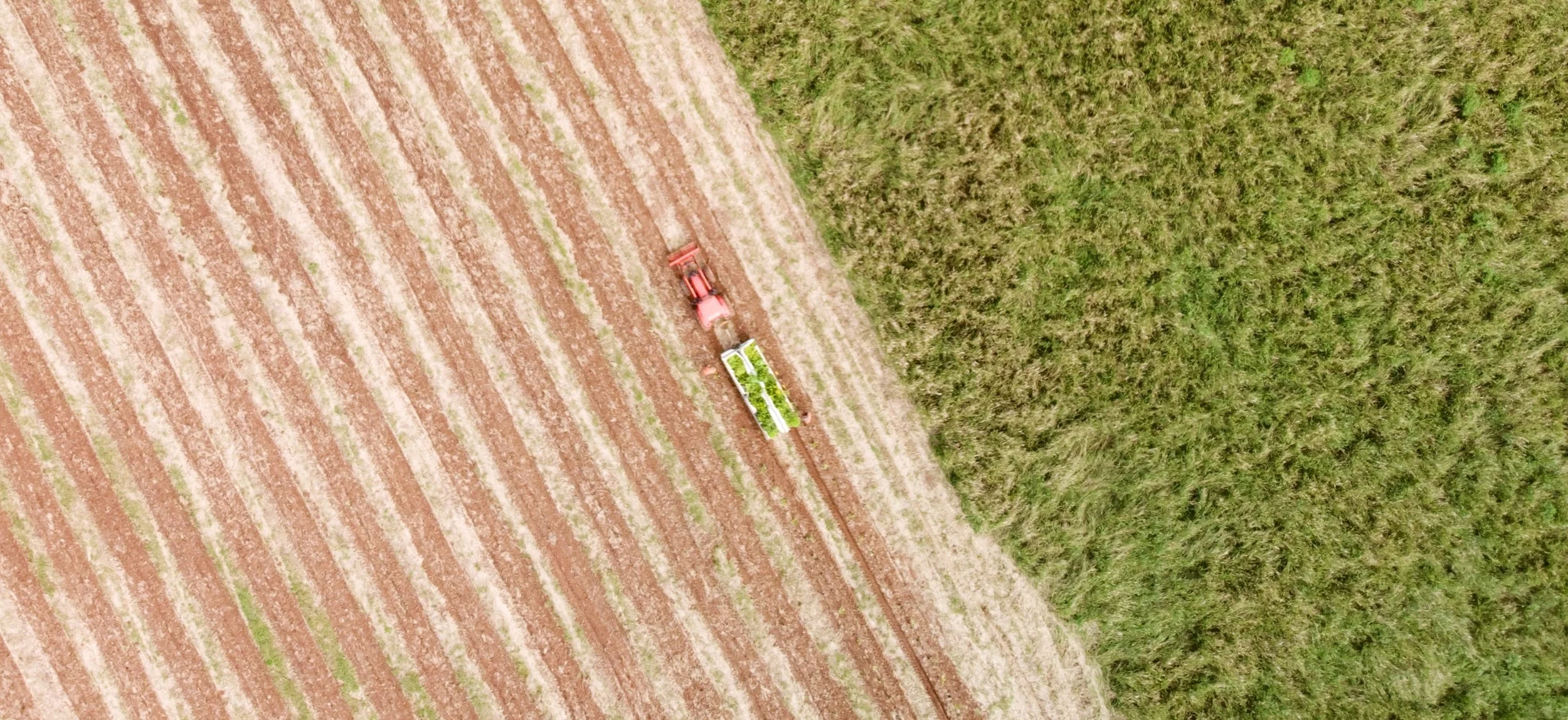
Integrating productive tree species with understorey crops, creating layered systems
AGROFORESTRY
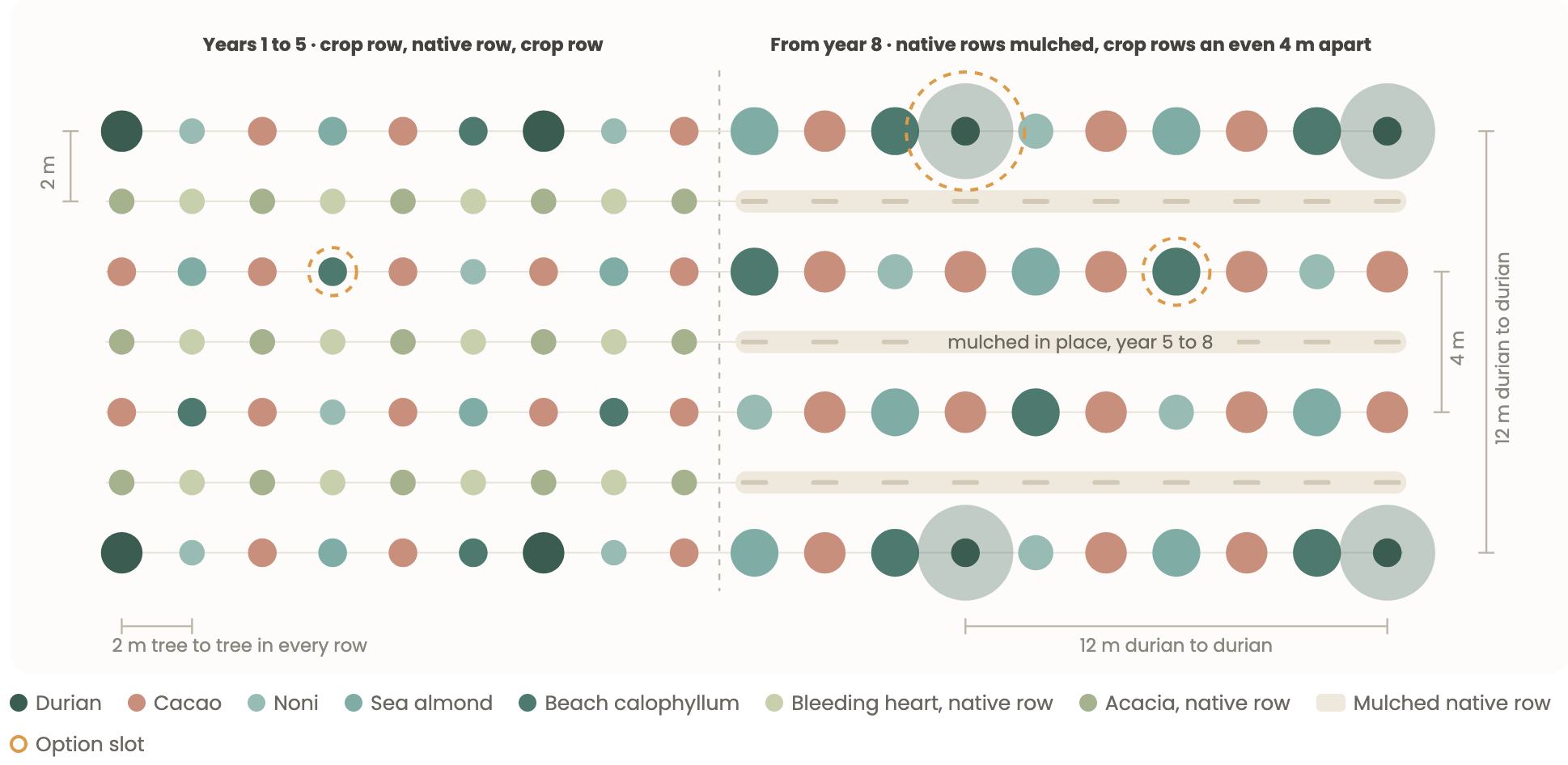
Crop and native rows alternate at 2m spacing, with trees 2m apart within each row. Crop rows combine durian with cacao and noni, both shade-tolerant understorey crops suited to growing beneath the developing canopy. Native rows provide early shade, shelter and biomass while crop trees establish.
Between years five and eight, native rows are mulched in place, leaving crop rows 4m apart. Durian sits on a 12m by 12m grid within the crop rows.
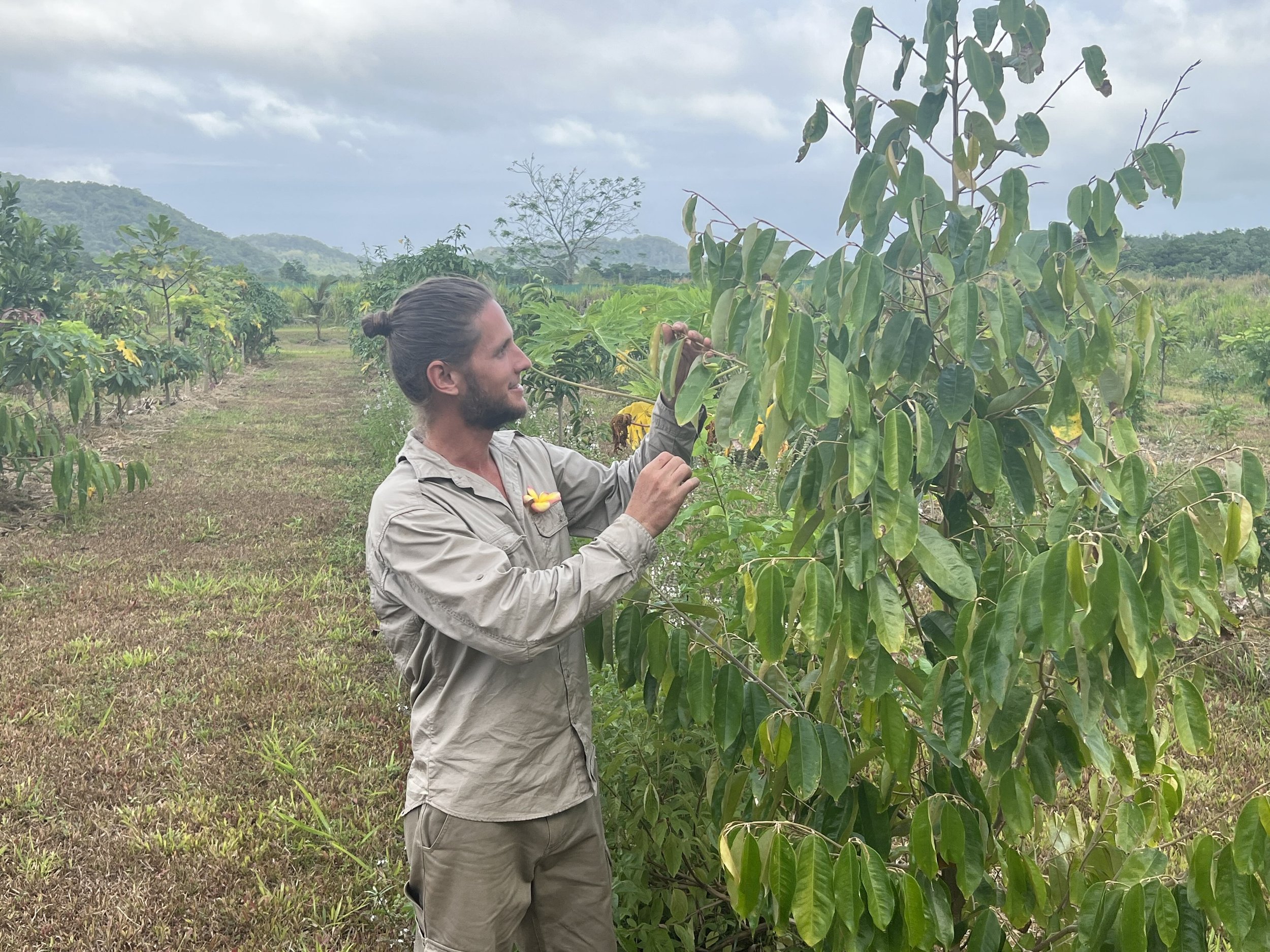
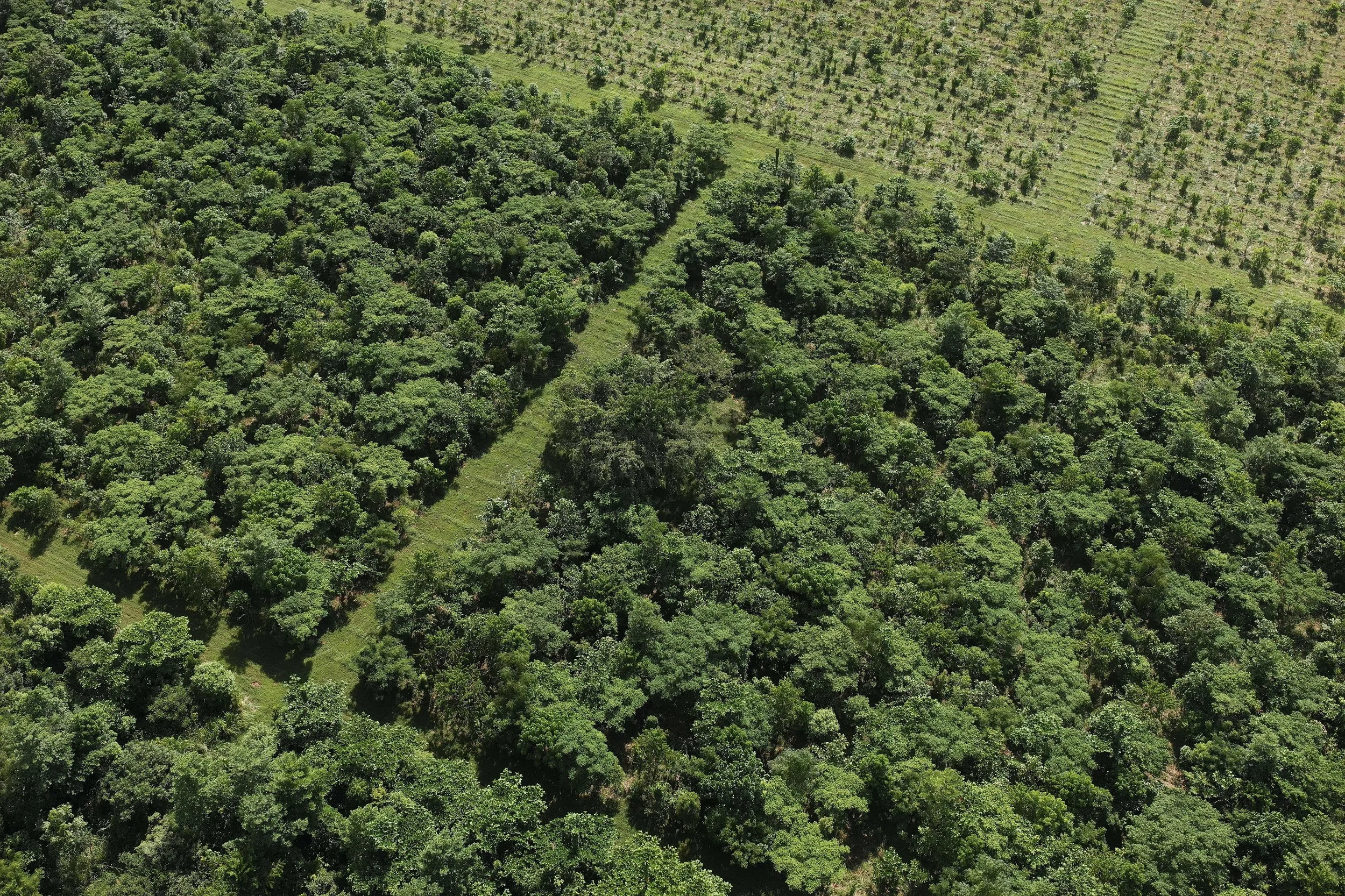
Rebuilding the ecological structure for both biodiversity and native harvest.
NATIVE REGENERATION
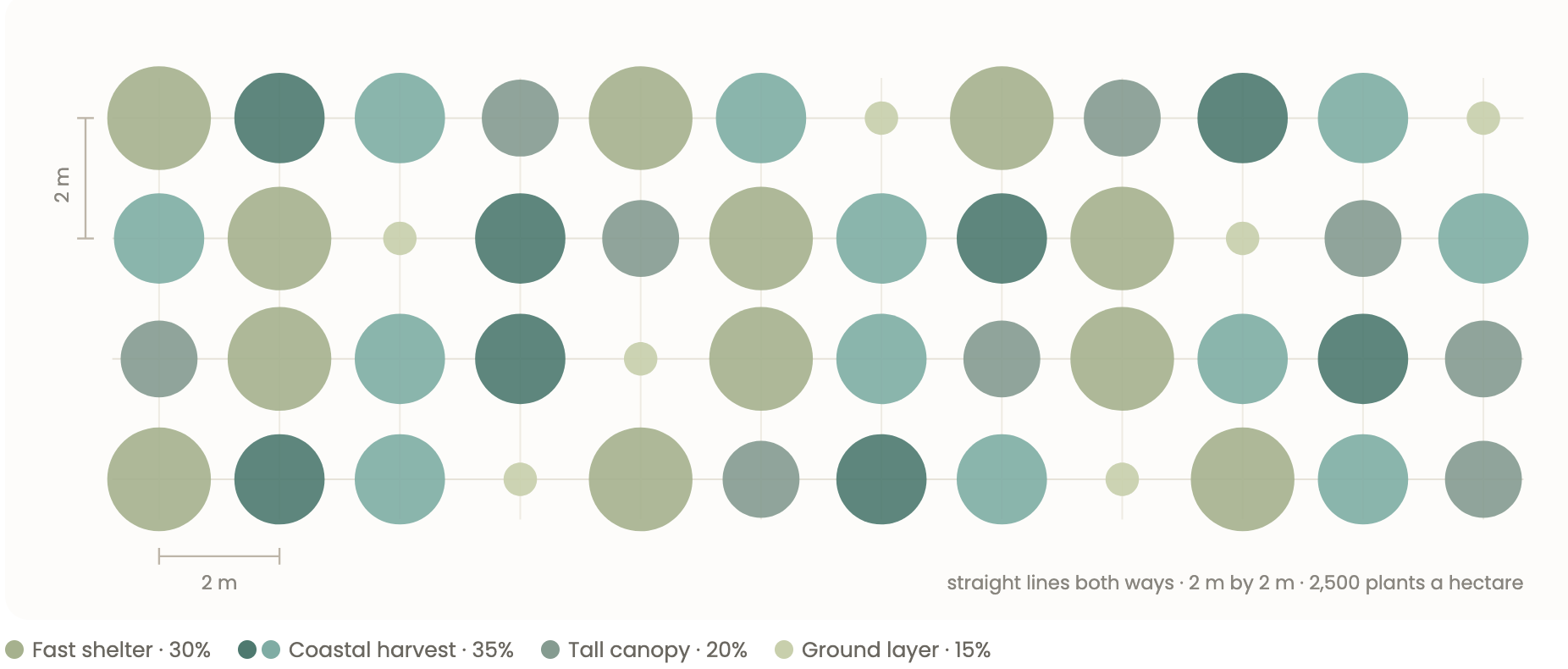
A planted native forest, picked by hand: 2,500 plants per hectare on a 2m by 2m grid, in straight lines, all native trees.
Utilising A-B Framework developed in-house, with specific species selection based on characteristics and establishment capacity, relevant to the area of planting.
No machinery post canopy closure, no thinning and no felling.
Cultivating high-value specialty crops suited to tropical conditions
Niche Cropping
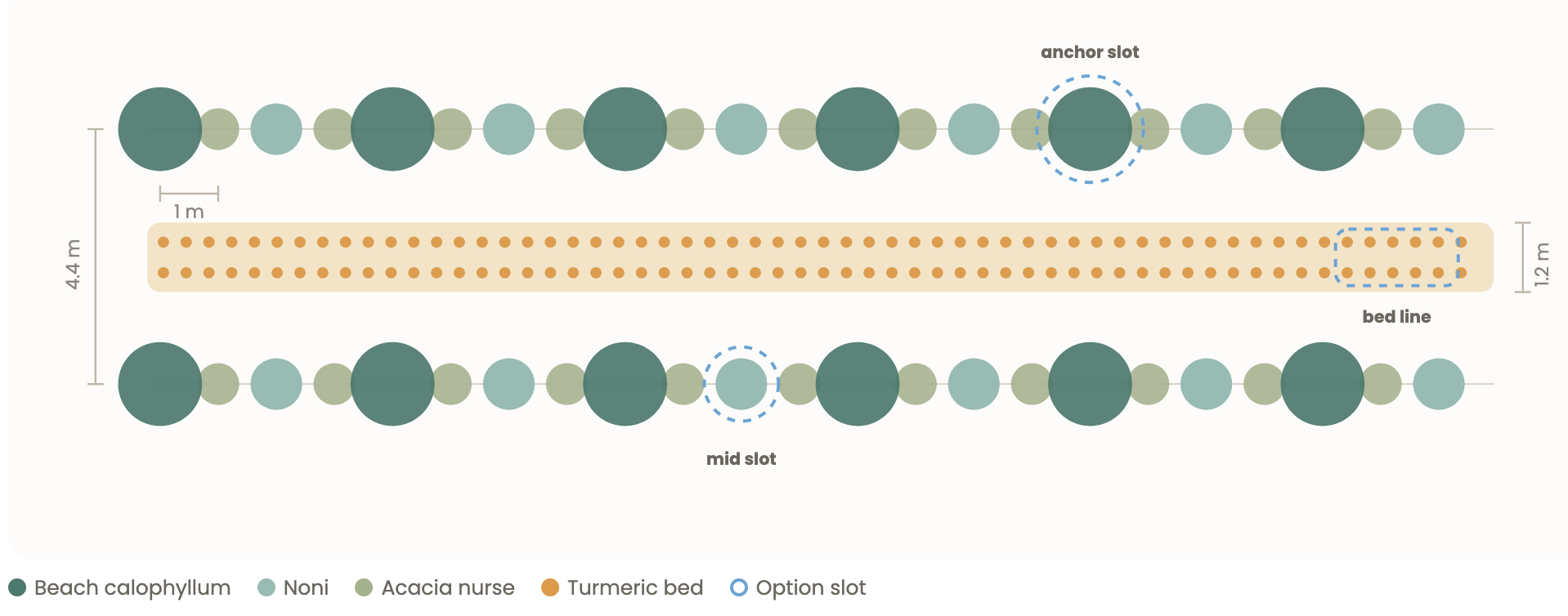
Alley cropping on rows 4.4m apart, with one plant every metre in a repeating sequence of calophyllum, acacia, noni, acacia. Calophyllum and noni each recur every 4m, with an acacia nurse tree in every gap between them.
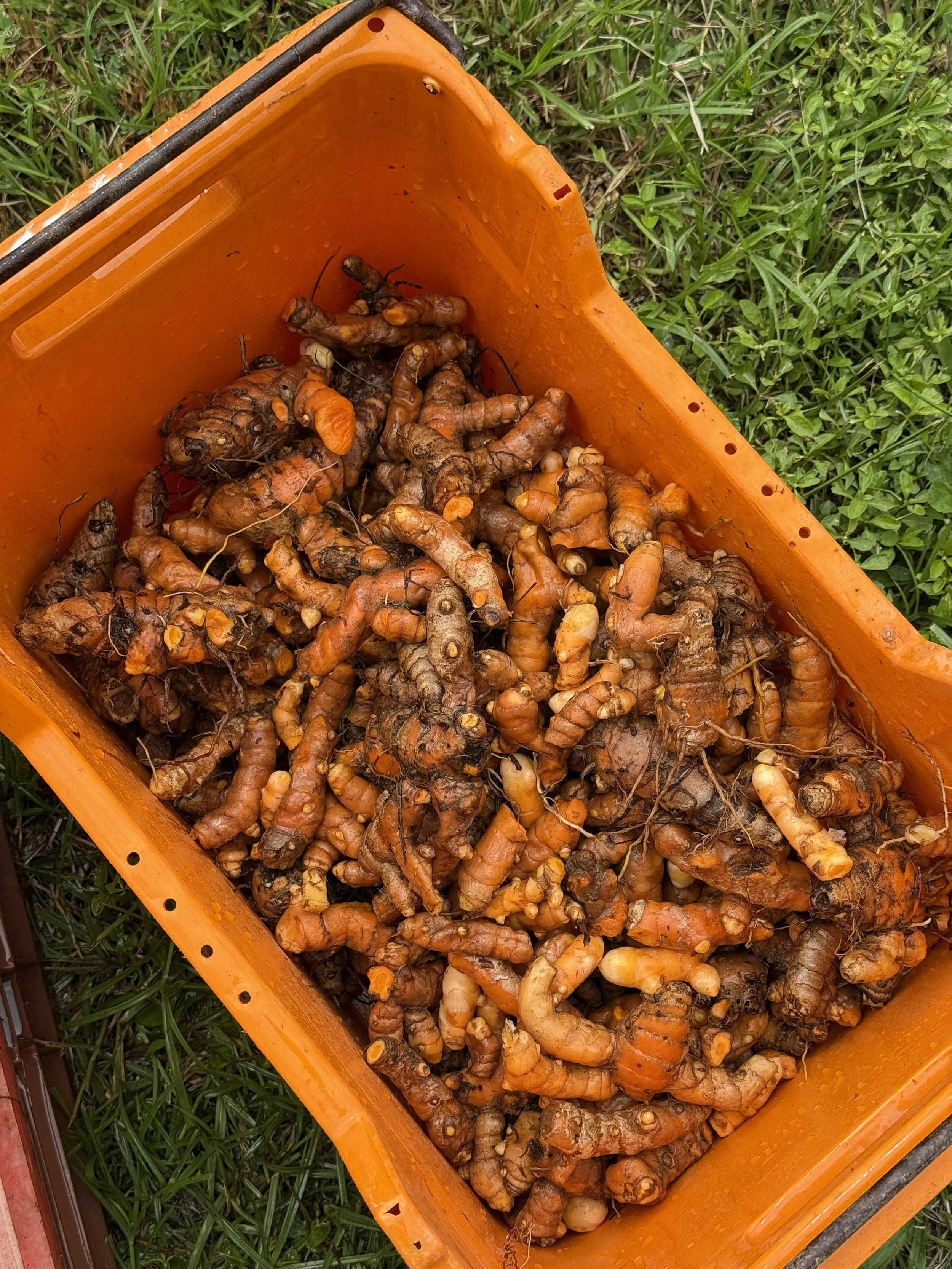
Acacia limbs are trimmed and drum mulched onto a 1.2m raised bed of turmeric that runs down the middle of each alley. Diversity options can be introduced at three points: the anchor slot on the calophyllum line, the mid slot on the noni line, and the bed line, either in place of or beside turmeric. The acacia nurse stays in every configuration.
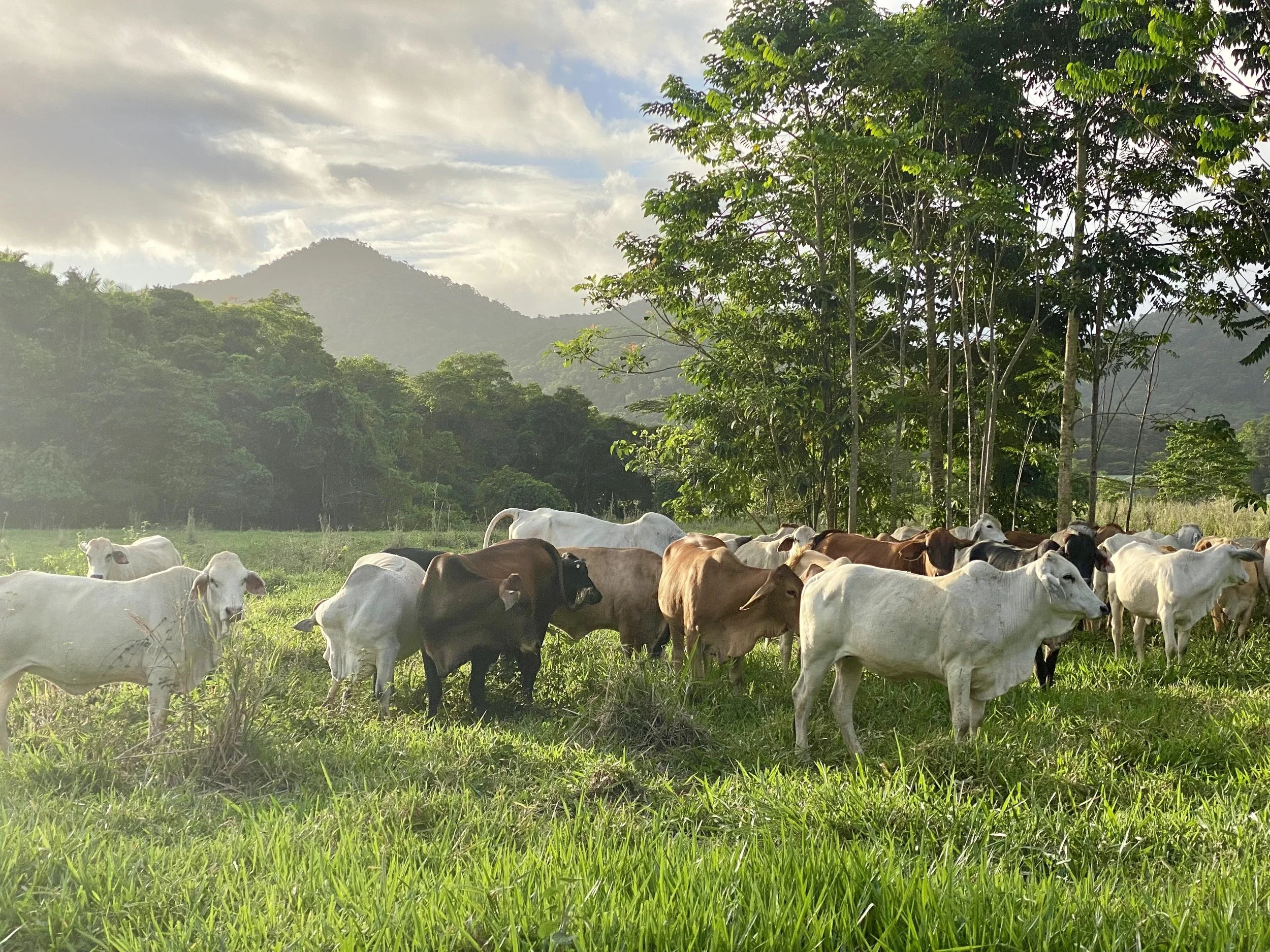
Integrating high-value timber species, forage and livestock in the same system
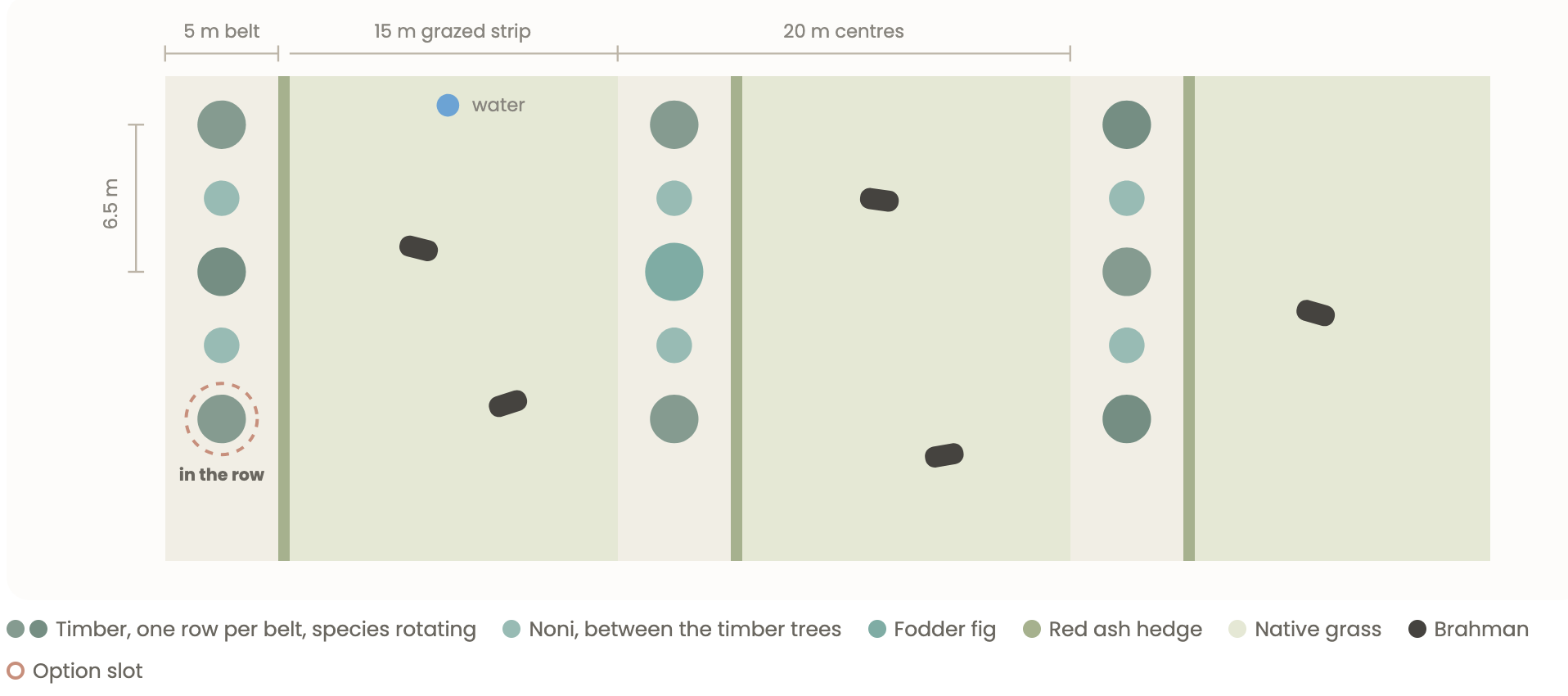
Native timber belts 5m wide on 20m centres, separated by 15m strips of native grass grazed by Brahman cattle at a ceiling of two head per hectare. Each belt is a single straight row with a timber tree every 6.5m and a noni between each pair, backed by a red ash fodder hedge on the grazing side.
Five timber species, forest red gum, red mahogany, Queensland maple, blue quandong and red cedar, rotate through the belts. The system is entirely native, with no exotic tree or hedge anywhere in it. Timber is cut selectively and no belt is ever clear-felled, while the noni is harvested for fruit and left standing.
Silvopasture
The context and regional position
130 years of sugar, ended.
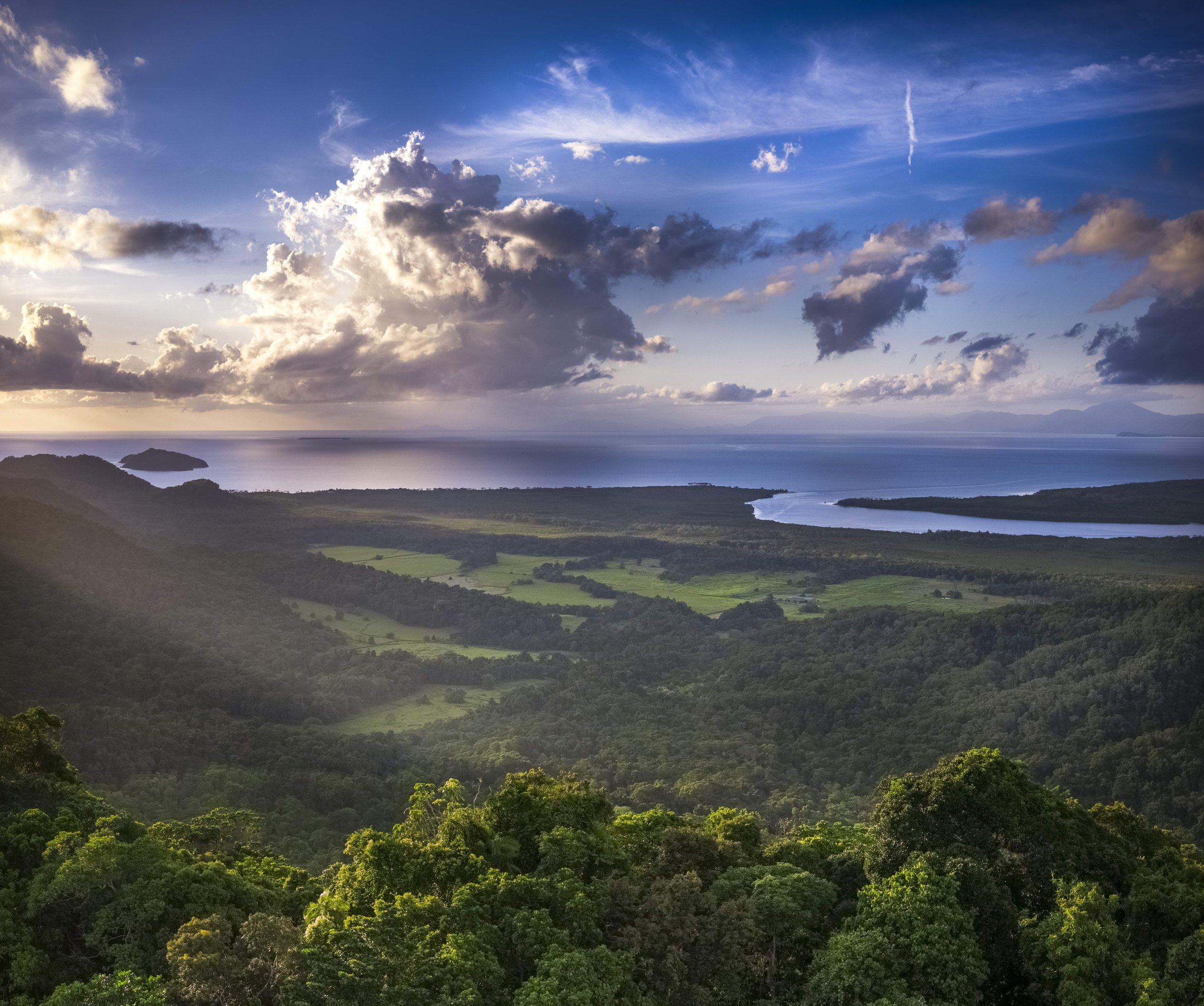
The Mossman Mill shut its doors in 2024, ending 130 years of operation. That leaves roughly 18,000 hectares of cleared land across Douglas Shire with no real economic use. Grazing returns keep shrinking, smallholder blocks keep splitting into smaller pieces, and without a real plan for what comes next, this land just drifts toward debt, weeds, lost value and failed succession.
Land-IP exists for exactly this reason. The four systems below are the levers we pull, one property at a time, to turn that around.
Seed-To-Canopy
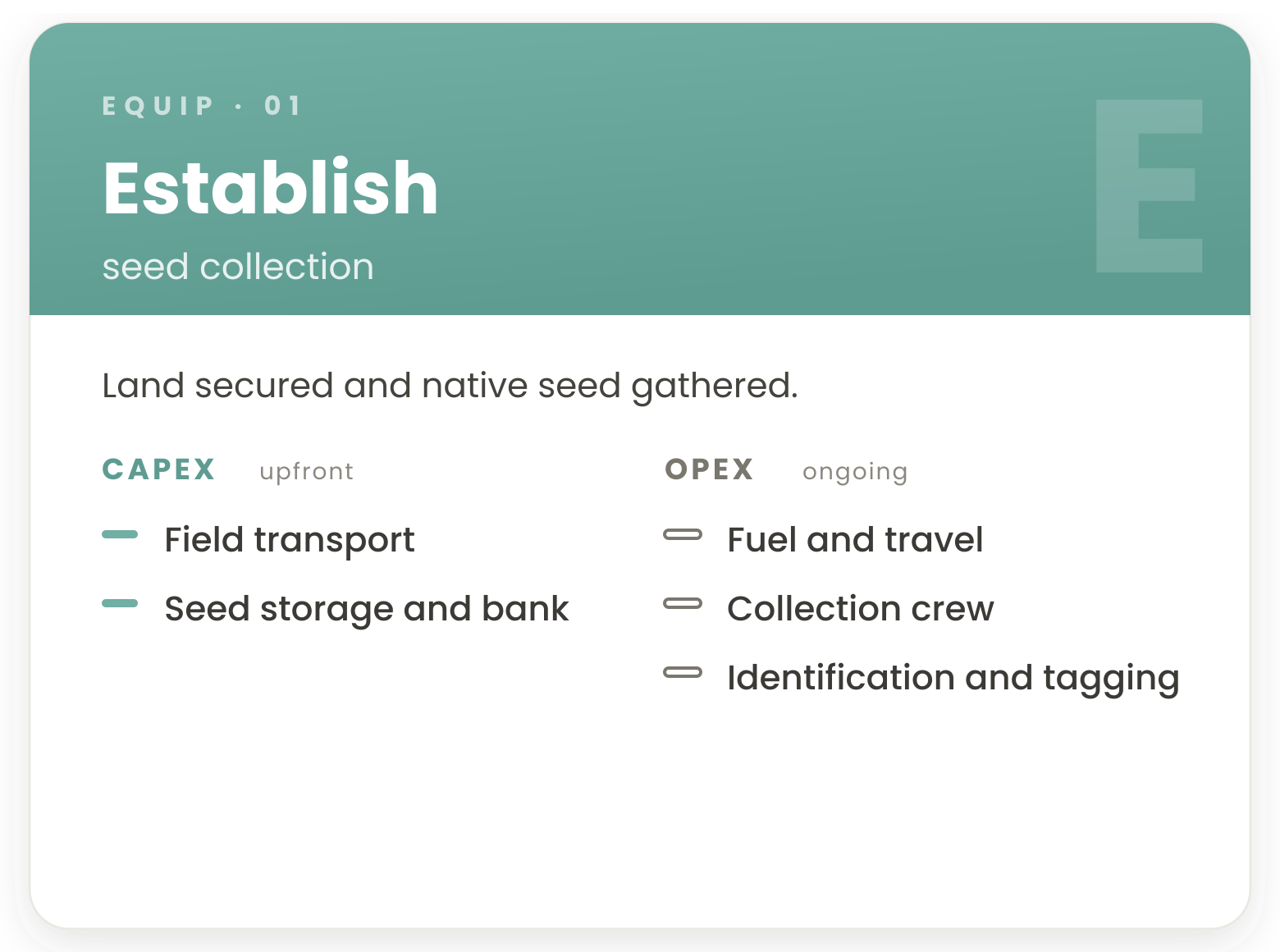
Enabling project managers to confidently understand successional costs and lifecycle considerations.
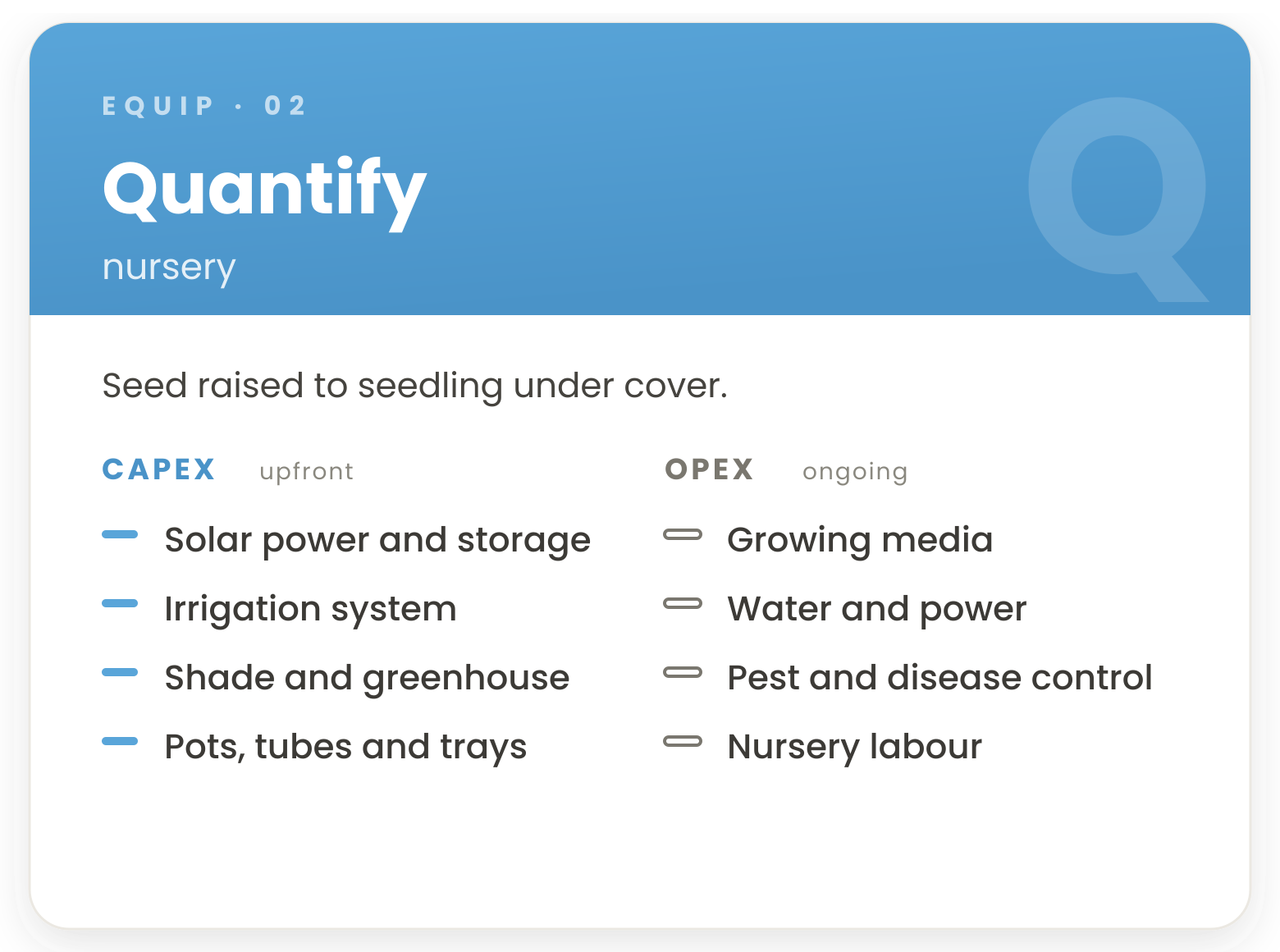
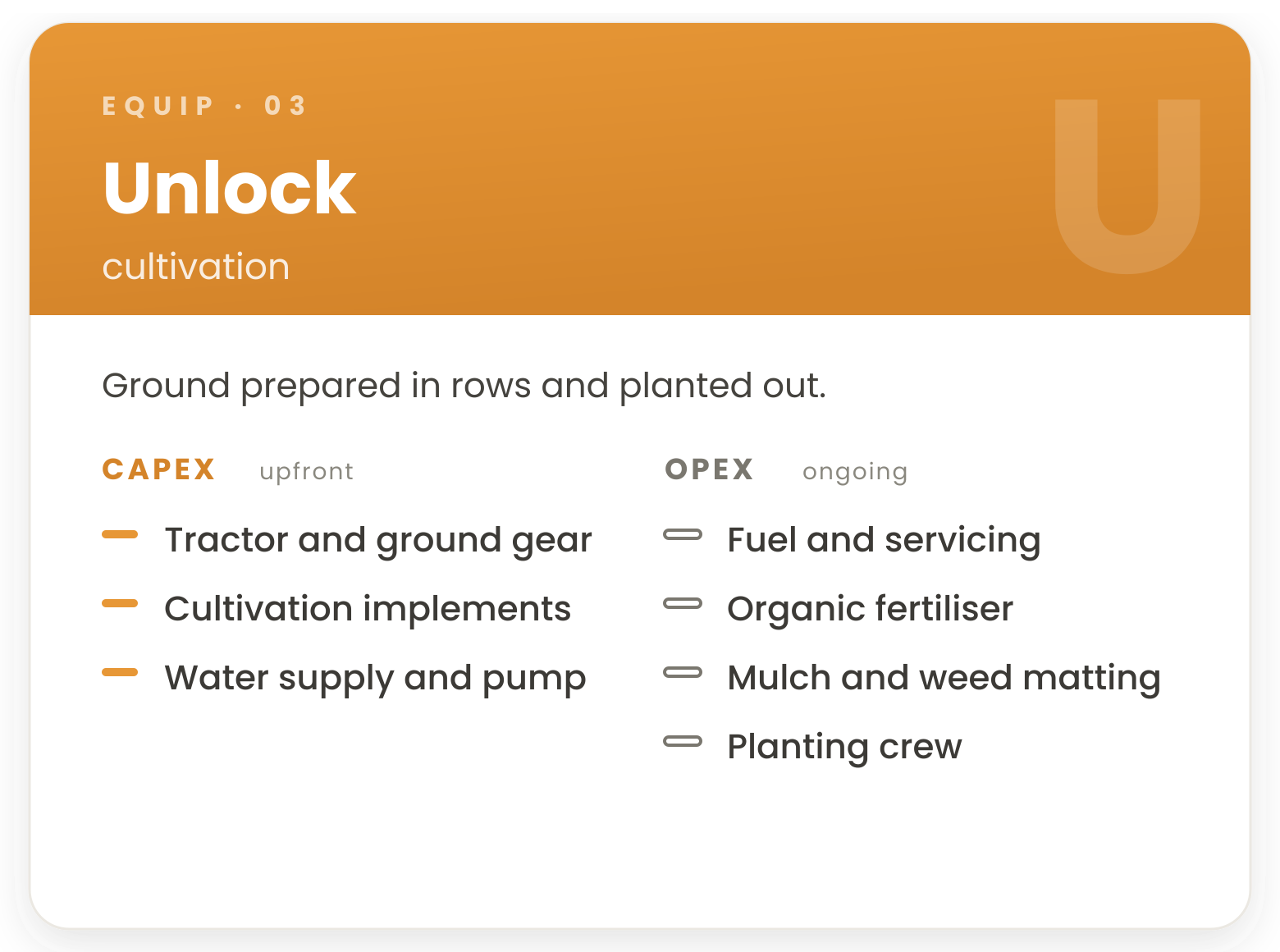
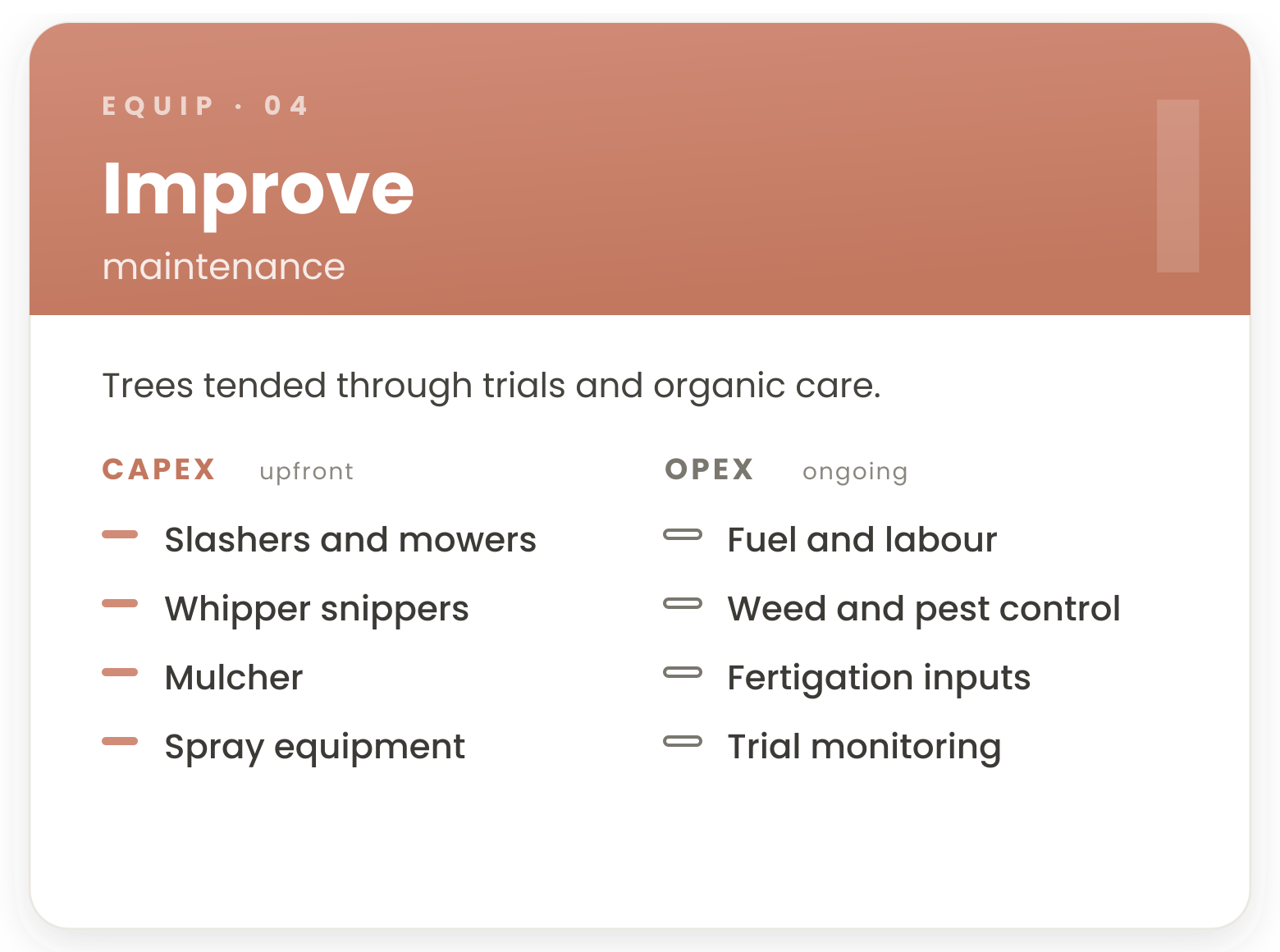
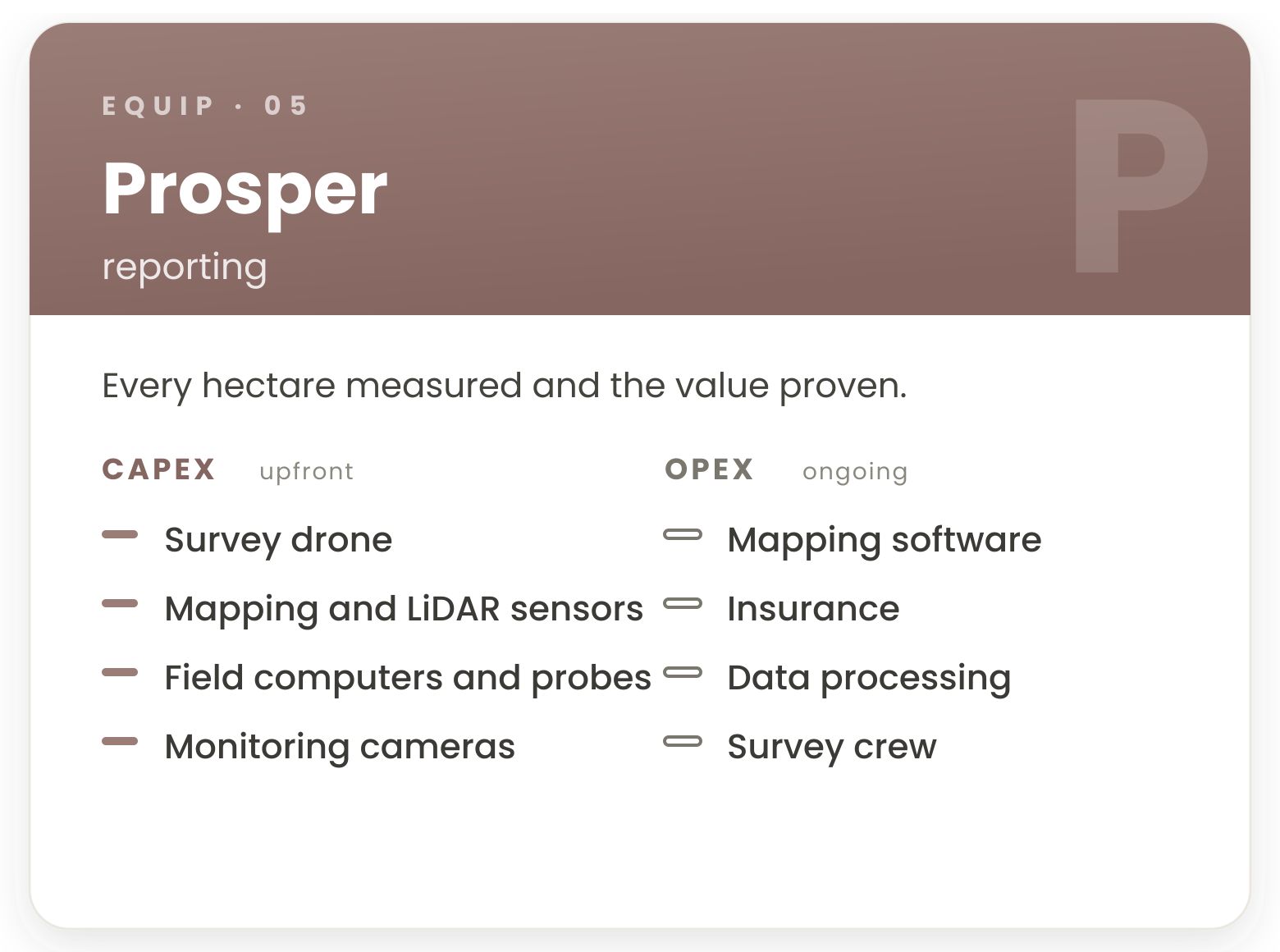
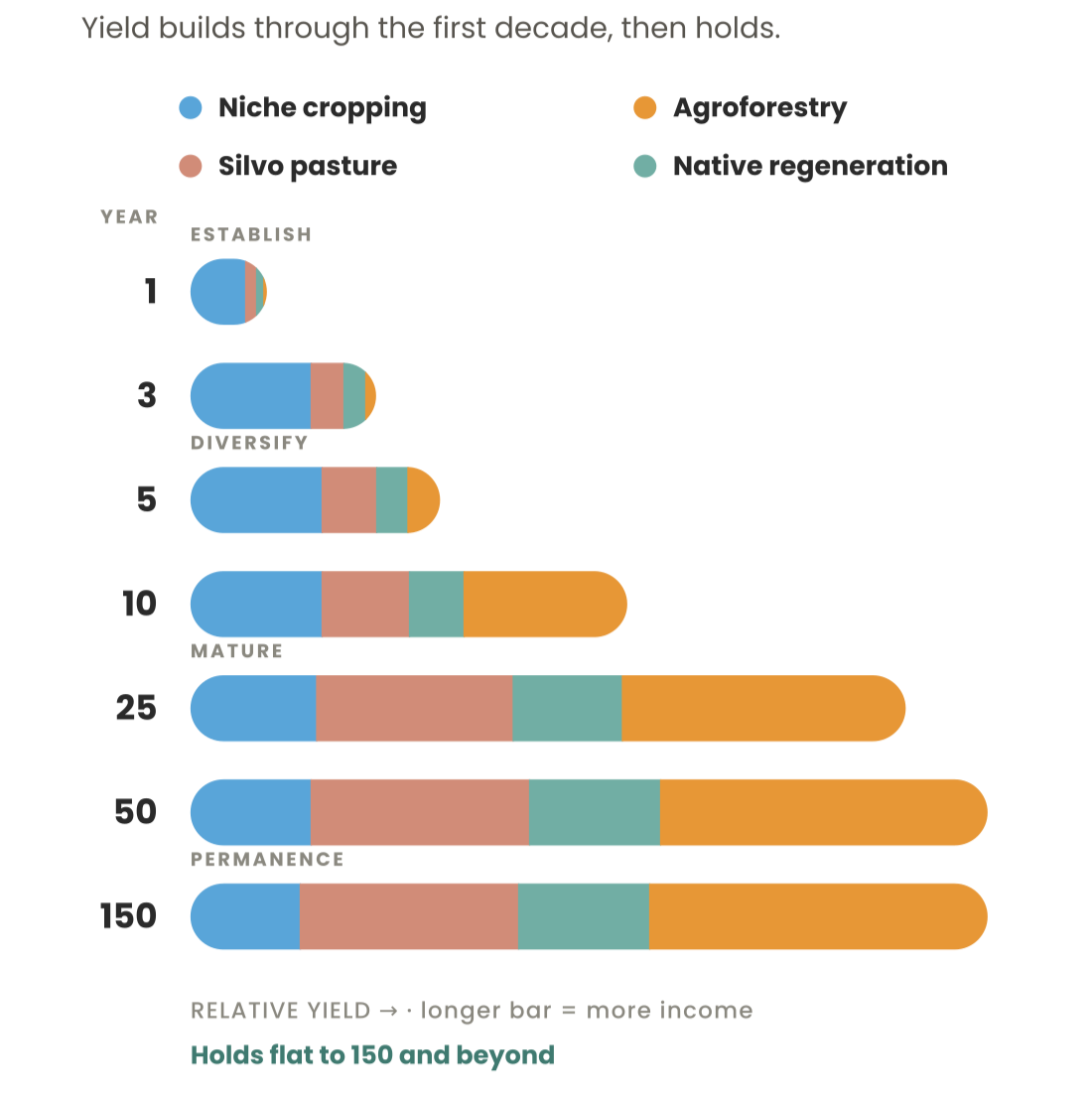
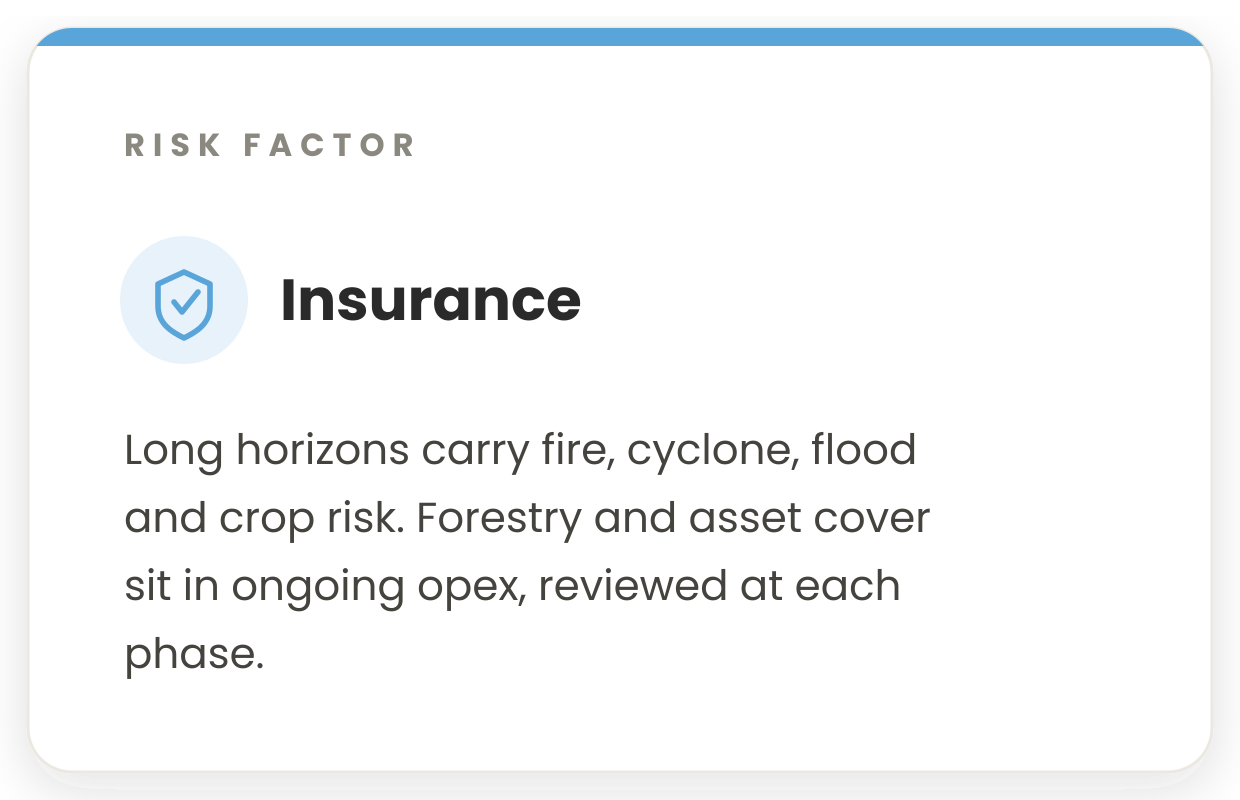
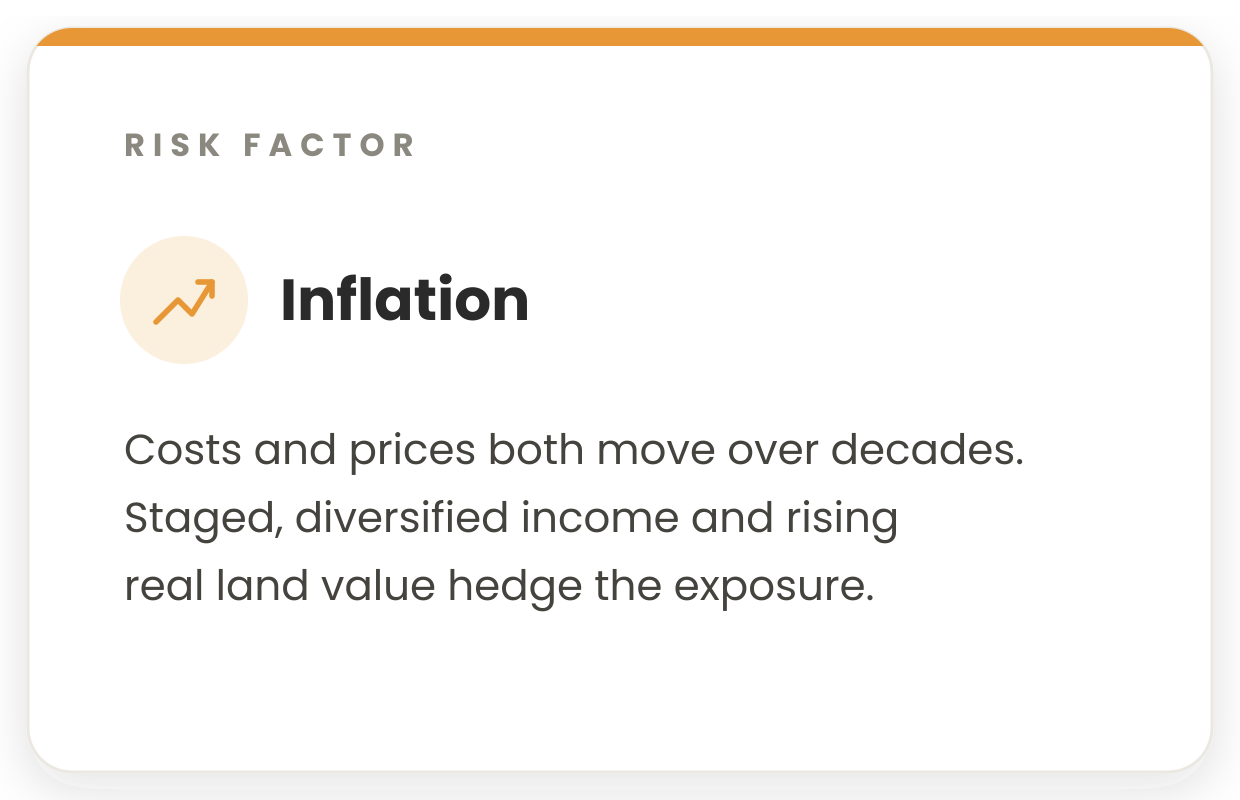
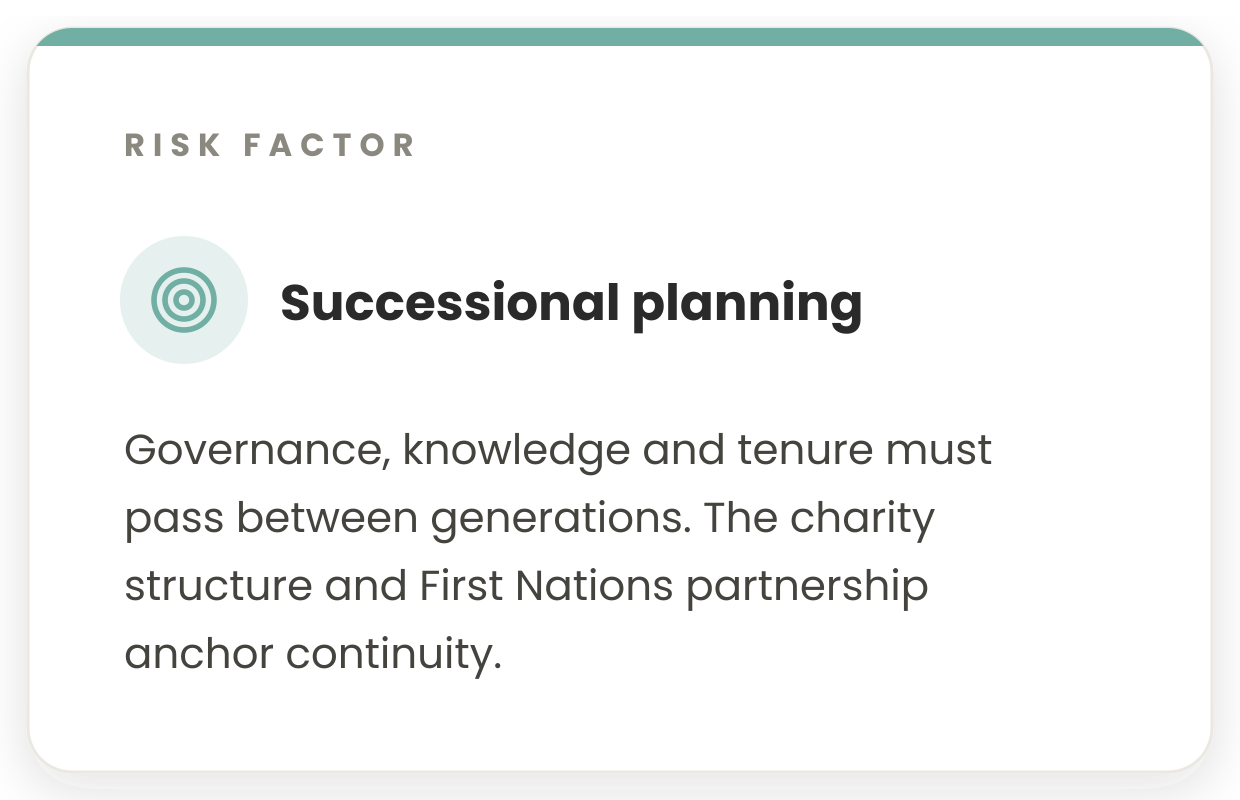
Each System Stacks and Stays, Risk Visible
150-Year Design
Co-Operative Model
No Grower goes to market alone