
Finding the Balance: What We’ve Learned About Organic Weed Management in Rainforest Restoration
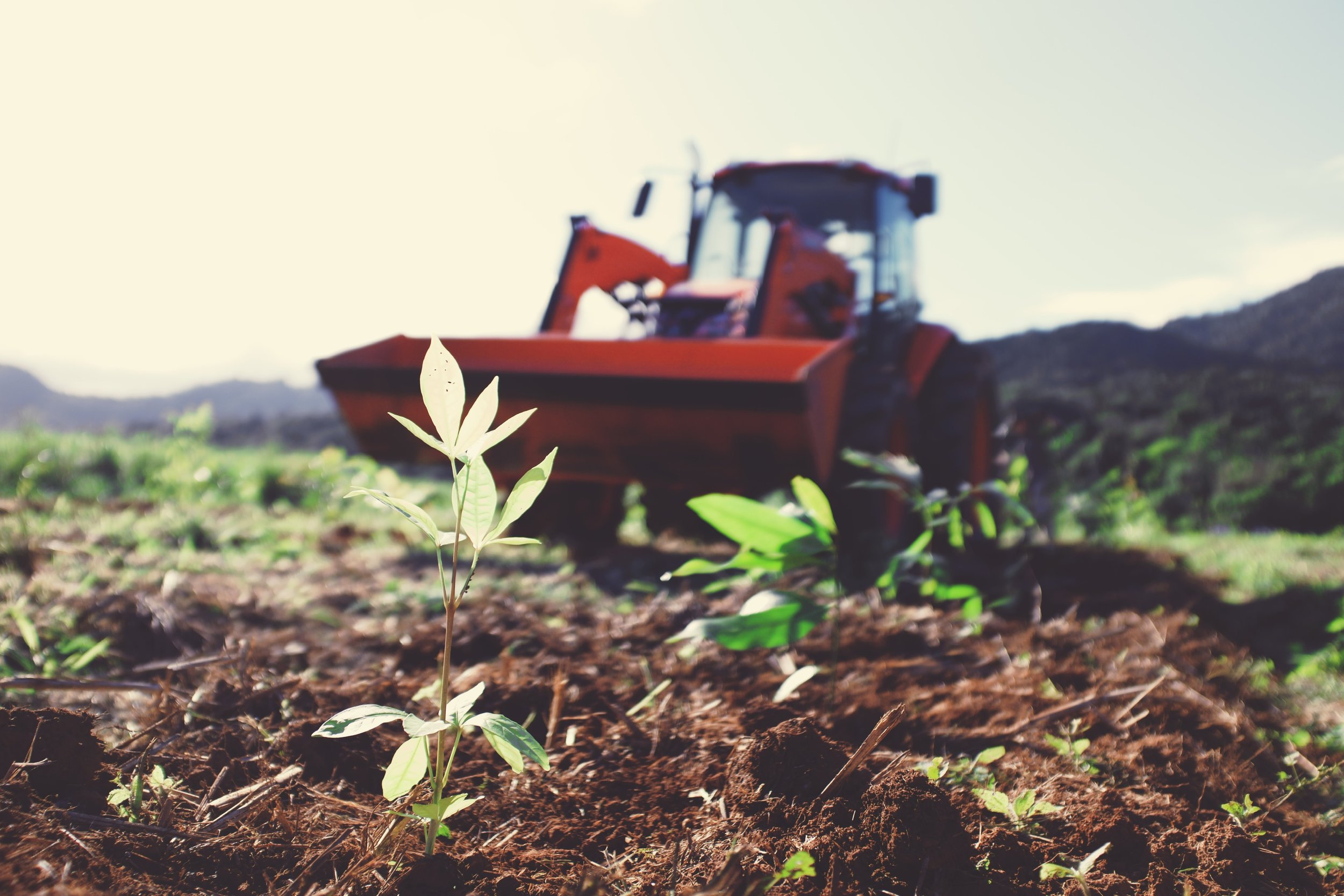
ClimateForce’s commitment to organic rainforest restoration goes beyond planting trees. Just as important is creating the conditions those trees need to survive and grow, particularly in the critical early years before the canopy closes. One of the greatest challenges in that period is managing the weeds and grasses that compete with young seedlings for light, water and nutrients.
Over the past four years, we have systematically tested a range of organic weed management and mulching strategies. The results are beginning to offer useful insights for landholders, researchers and restoration practitioners.

Diverse Strategies for Complex Ecosystems
Our trials ranged from mechanical weed control, such as slashing and brush cutting, to more ecological approaches including selective weeding, groundcover integration and the careful use of certified organic herbicides. All work was carried out under strict Australian Certified Organic (ACO) standards.
We also compared four mulch treatments. Forestry mulch consisted of coarsely chipped woody biomass, while carabeen mulch was made from locally sourced organic material. Guinea grass (GG) mulch used biomass cut and chopped on site, and a no-mulch control provided a baseline for comparison.

Our field staff collected data as part of daily operations, using GPS tracking apps to record tractor-based activities and digital survey forms to log inputs. Monthly mortality checks gave an accurate picture of how each treatment affected seedling survival.
Climate-Aware Restoration: The Key Takeaway
The overall results were clear: no single mulch performs best in all conditions. Each type has strengths and weaknesses that depend on local weather patterns.
Carabeen mulch was the most balanced performer, pairing moderate sensitivity to climate with strong cost-efficiency. Forestry mulch performed well under moderately variable conditions but needed closer monitoring in hotter areas. Guinea grass mulch was the least consistent and least cost-effective, performing poorly under both extreme heat and heavy rain. Leaving ground unmulched saved on costs but left seedlings considerably more exposed to climatic variability and environmental stress.
These findings suggest that future restoration protocols should be climate-aware, drawing on seasonal temperature and rainfall forecasts to guide both mulch selection and the timing of application.
How Our Approach Evolved
In our earliest restoration trials, particularly Plant Out 1, weed management relied heavily on mechanical methods, mainly slashing and brush cutting. These were effective at suppressing above-ground weed growth, even in dense tropical conditions. They were also extremely labour-intensive, demanding high effort per hectare and frequent return visits to keep the ground around young seedlings clear. While this approach supported early growth, it soon became clear that it was not sustainable over the long term, either economically or ecologically. Repeated mechanical disturbance also put soil structure and seedling roots at risk when not carefully managed.
By Plant Out 2, the team recognised the need to broaden its approach. This phase became an important experimental testbed, where we trialled a wider range of management treatments to assess their effect on both weed control and ecological performance. We introduced organic herbicide applications, using ACO-approved inputs, as a complementary tool to reduce labour and suppress regrowth in targeted areas. We also refined our mechanical work by adopting grid-based slashing patterns, which improved efficiency and cut down on unnecessary passes.
Plant Out 2 also marked the start of a more ecologically integrated design philosophy. We began to assess weed suppression not only in terms of visibility and access, but also for its effects on microclimate, soil cover and the protection of non-target plants. The aim was to strike a balance: suppress dominant invasive species without needlessly disturbing beneficial understorey growth or exposing bare soil to erosion. This period of adaptive experimentation laid the groundwork for a more holistic restoration strategy.
By Plant Out 3, the evidence was building and the benefits of integrated management were becoming clearer. After analysing field results, cost data and ecological indicators, we moved to a refined methodology, formalised as Management Type 3. It brings several effective practices together into a cohesive, repeatable system. Targeted mulching suppresses weeds and retains soil moisture, while spot applications of organic herbicide reduce manual labour in hard-to-reach or persistent weed zones. Selective weeding protects desirable companion species, and grid-oriented slashing keeps operations streamlined.
Management Type 3 stood out as a strong candidate for future implementation, not only for its effectiveness against weeds but also for its cost-efficiency and ecological compatibility. It reduced overall labour, helped maintain soil health and allowed maintenance rounds to be scheduled more consistently. Above all, it supported young seedlings through their most vulnerable stages without over-clearing or over-intervening in the surrounding ecosystem.
The shift from purely mechanical methods to a multi-tool, ecologically sensitive strategy is a significant step towards restoration systems that are both practical and regenerative. As operations expand, Management Type 3 offers a sound model for weed management that balances performance with the long-term goals of soil resilience, biodiversity and restoration success.

Moving Forward: A Smarter Way to Restore Forests
Our work at ClimateForce shows that with good data and adaptive management, organic restoration strategies can be refined to deliver both strong ecological outcomes and cost-efficiency.
We will continue to monitor these trial plots as they mature, testing and strengthening combinations of treatments and refining our approach as part of our aim to develop a model for scalable, regenerative land restoration.
We will be sharing more results as they come in, along with how the lessons from this site might be applied to other tropical restoration projects.
