
Roots & Realisations: Inside the ClimateForce Educational Camps
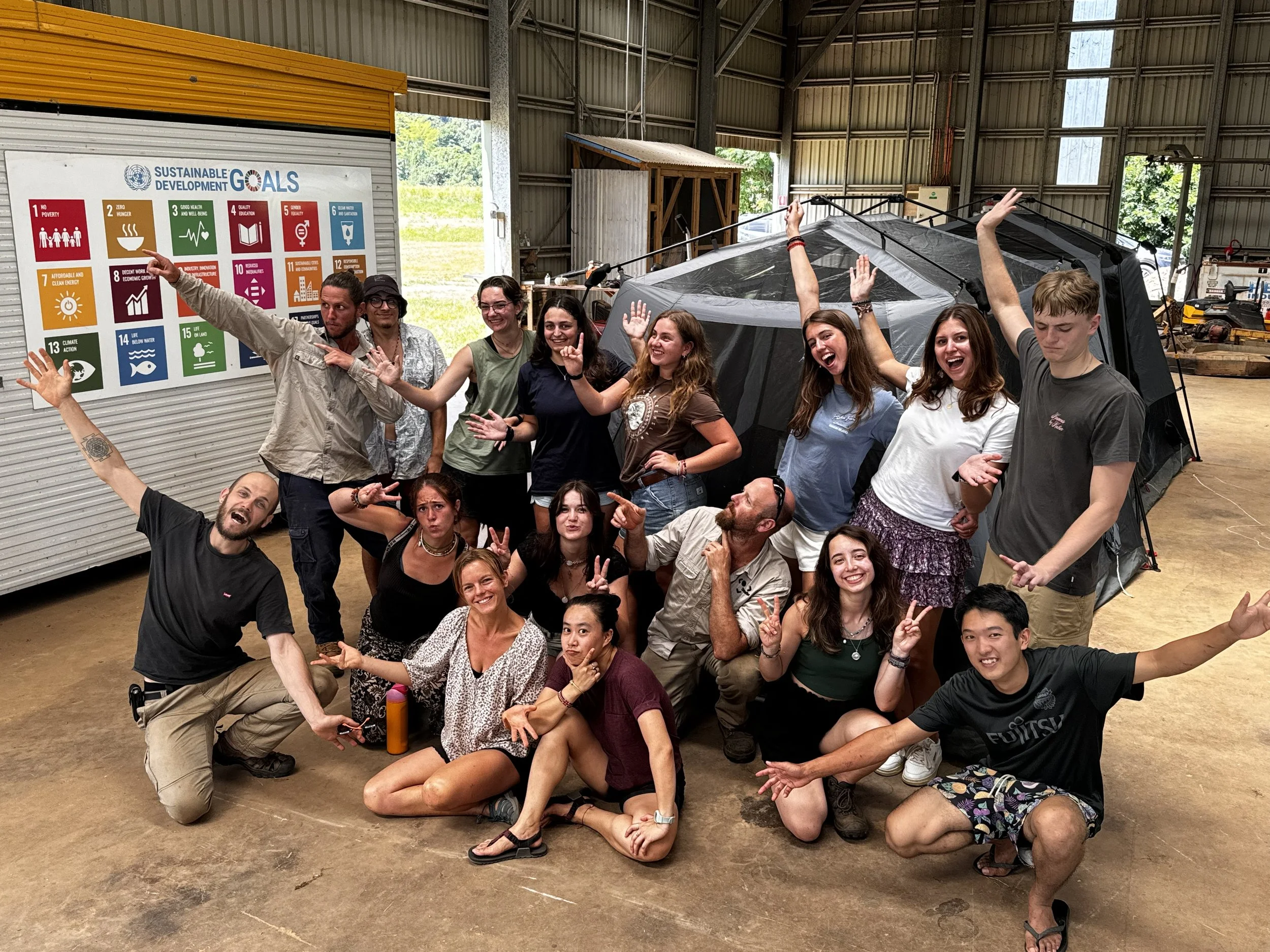
There is a moment out here on the land when something clicks. It often comes around dusk, when the fire is crackling, the forest begins to hum and a quiet settles over the group. Boots are still muddy and minds are still busy, yet there is a kind of reverent stillness. It might follow a day of planting, a meaningful yarn with an Elder, or simply watching the morning mist lift off the range. Whenever it arrives, something shifts and a deeper understanding takes root. At ClimateForce, we have come to treasure that moment, because it is when learning becomes lived experience, and young people move from knowing about the environment to feeling deeply connected to it.
That is why we created the ClimateForce Educational Camps, immersive, hands-on experiences in rainforest restoration and environmental leadership. They are far from a standard school trip. They open the way to a more conscious, earth-centred way of seeing the world.
Each program brings students and young leaders into the heart of the Daintree Rainforest, one of the oldest and most biodiverse ecosystems on Earth, and gives them the chance to take part in work that is real, grounded and urgently needed.
Here is what that experience looks like.
Starting from the Ground Up - A Welcome to Place
Before students plant a single tree, they are invited to plant something else: a sense of connection.
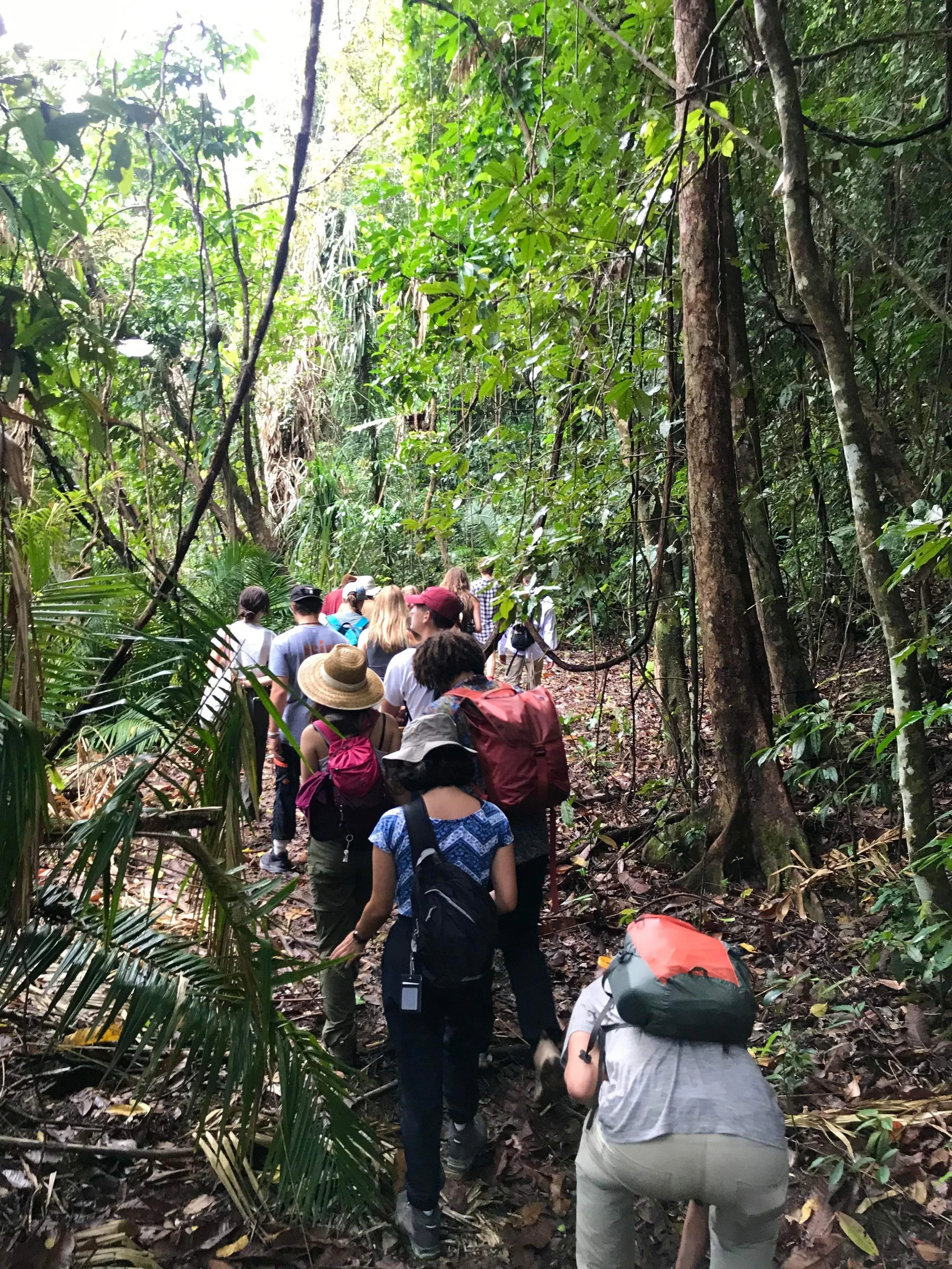
Each ClimateForce camp begins with a welcome onto the land and a guided introduction to the facilities, the nursery and our active reforestation zones. Students walk the same ground where thousands of native trees have already gone in, getting a feel for the place and the living systems they are about to become part of.
As we move through the site, we share the story of ClimateForce: how it began, the milestones along the way, the lessons learned and the vision that guides our work. It is a chance to reflect on what has been achieved and what still needs to be done.
The rainforest becomes part of the welcome. Towering trees, shifting light and distant birdcalls create a setting that makes the importance of this work felt.
We also explore the ecological crossroads of Cape Kimberley, where rainforest, mangrove and reef systems meet, helping students understand how climate, biodiversity and local action are bound together.
This first session is about grounding as much as orientation. It is a first step into real work, where every conversation and action contributes to a shared story of care, courage and regeneration.
From Sweat to Systems – Experiencing Restoration First-hand
There are no lectures here and no standing on the sidelines. Just hands in the soil, sweat on the brow and the particular satisfaction of doing work that matters.
Under the guidance of Tom, our Land Manager, tree-whisperer and resident soil philosopher, students go straight into the practical work of ecosystem regeneration. This is where theory meets practice, and practice often means a few blisters, plenty of mud and a touch of sun, depending on the season.
The tasks vary, but each has a purpose. Students dig planting holes in hard clay, pull out invasive guinea grass, tend the planting rows, spread mulch and water in seedlings, all while learning to read the landscape as a living system. Some days are dry and scorching, with shirts soaked through by morning break. On others, the wet season turns the site to soup, boots sinking deep as rain drums overhead. Through it all, students learn one of the central truths of restoration: the rainforest does not keep to a timetable, so we adapt.
As they work, they begin to understand the reasoning behind each technique. They see why planting density changes management needs, how sun-tolerant pioneers shade slower-growing species, and how strategies shift between the wet and dry months. They learn about succession, how some trees lead while others follow in their shelter, and why a healthy forest starts forming long before it looks like one.
Each task becomes part of a larger rhythm, a working model for regeneration.
Students walk through paddocks that were once bare and are now full of life. They hear wallabies moving through the undergrowth, find fungi threading through the mulch and notice insects returning to fill their niches. With every shovel of soil, they come to see restoration as real, physical and slow work, and as an act of healing rather than a romantic idea. Above all, they feel in their own bodies what action looks like and what hope can feel like. In a world of grim climate headlines and widespread eco-anxiety, putting your hands in the soil and watching something grow may be one of the most empowering things a person can do.
Inside the Nursery – Learning to Nurture

A nursery has a quiet power of its own. There are no roaring machines and no grand gestures, just rows of seedlings, careful hands and the steady rhythm of care.
Led by Liana, our Nursery Manager and greenhouse guardian, students experience restoration at a different pace. Here the work is about patience, precision and respect for life at its most vulnerable, rather than force.
They begin with seed collection and processing, learning to tell when a fruit is ripe, how to extract and prepare its seeds, and what each species needs to germinate, whether that is soaking, scarification or sowing straight away while the seed is fresh. There is no single method. Each species has its own needs and its own timing.
Then comes the daily tending. Students pot up seedlings, hand-water trays, clear away dead material and carefully move young plants into larger tubes as their roots develop. Every movement is deliberate, and every task contributes to a tree that may live for centuries.
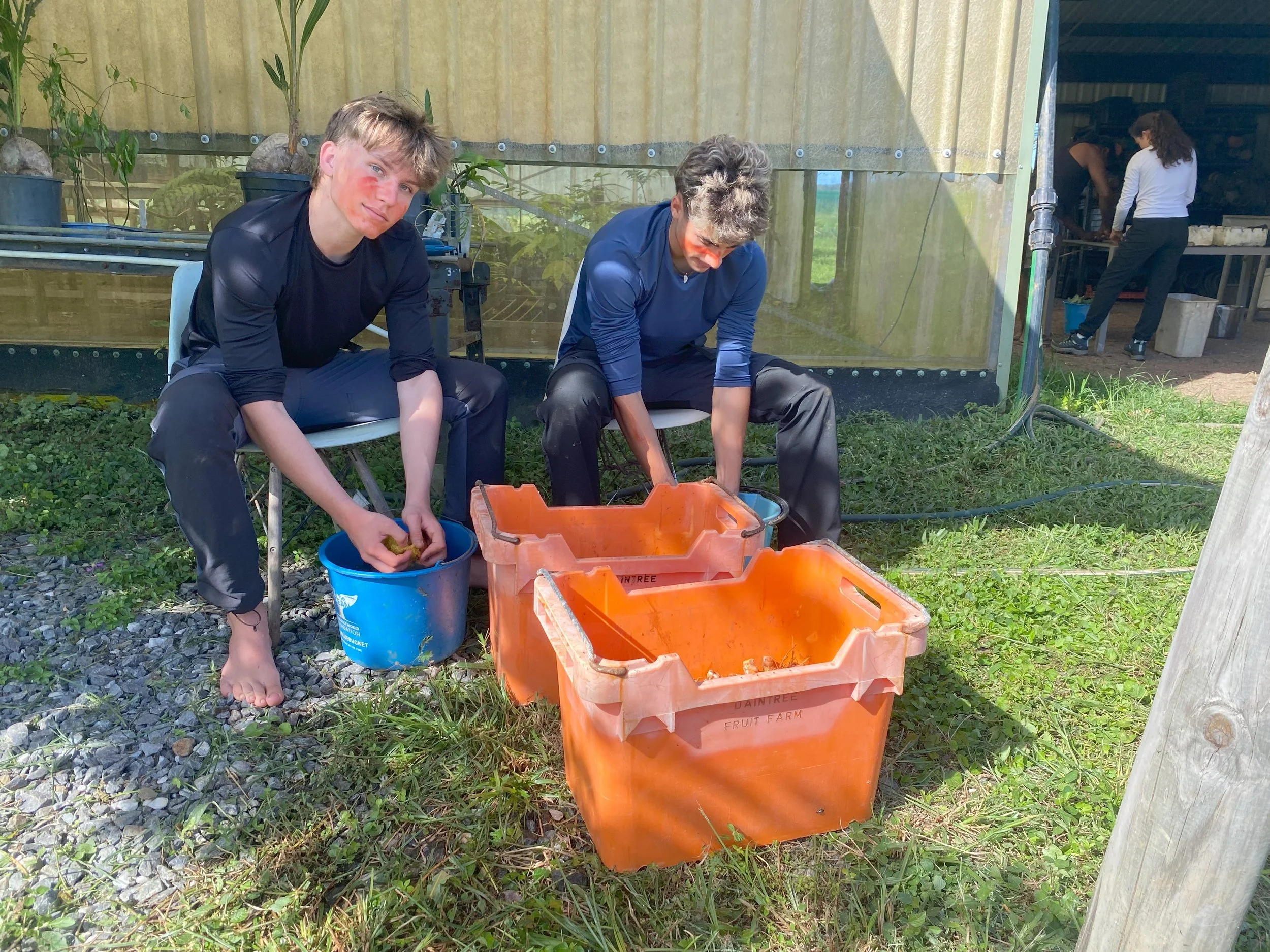
Some days are methodical - tagging batches of seedlings, updating growth records, shifting trays to catch the sunlight. Other days, it’s all hands on deck - a big transplant push before the rains, or a rescue mission after a bandicoot raid. Through it all, students learn that nurturing a forest starts with knowing its infancy. Over time, the trays stop looking like plants and start looking like potential. A Daintree Satinash destined to feed fruit doves. A native nutmeg that will one day shade a stream. A slow-growing cedar that won’t reach its peak in their lifetime - but will offer shade to someone else’s grandchildren.
This is where restoration gets personal, when you’ve raised something from seed - watered it, sheltered it, and given it space to grow - you don’t forget.
And that’s the lesson: real regeneration isn’t just about planting trees. It’s about tending futures. Carefully. Consistently. And with heart.
Ecological Economics – Why Restoration is Worth It
There’s something unexpectedly inspiring about a whiteboard in the rainforest.
No spreadsheets projected on walls. No suits. Just students in dusty boots, seated under a tin roof, listening as Barney - our founder, restoration economist, and big-picture thinker - connects the dots between ecology and economy.
He doesn’t sugar-coat it. Restoring rainforests takes money. Time. Planning. And long-term commitment. But it also opens doors - to new livelihoods, smarter systems, and a different kind of value creation. Students begin with the basics. What does it cost to restore a hectare of lowland tropical rainforest? What are the variables? How do labour, mulch, species selection, monitoring, and maintenance all add up? Then come the opportunities. They explore how carbon markets, biodiversity credits, eco-tourism, and regenerative agriculture feed into a growing restoration economy. They question who benefits, who’s left out, and how we make these systems fair.
Some days are numbers-focused - breaking down budgets, modelling scenarios, debating trade-offs. Other days shift to vision-building - how green infrastructure, ethical supply chains, and Indigenous land stewardship can all sit at the centre of a better economy.
Through it all, something clicks: regeneration isn’t just good for the planet. It’s a viable, evolving career path. And for students who’ve never seen themselves in conservation - who are drawn to business, law, finance, or innovation - this is often the pivot point. They walk away knowing that restoration needs analysts and architects as much as arborists and ecologists. That innovating new systems doesn’t always start with a shovel - sometimes, it starts with a spreadsheet.
And that being part of the solution? It isn’t years away. It’s right now.
Research & Technology – Measuring Change with Jack
Some classrooms have whiteboards. Ours has canopy.
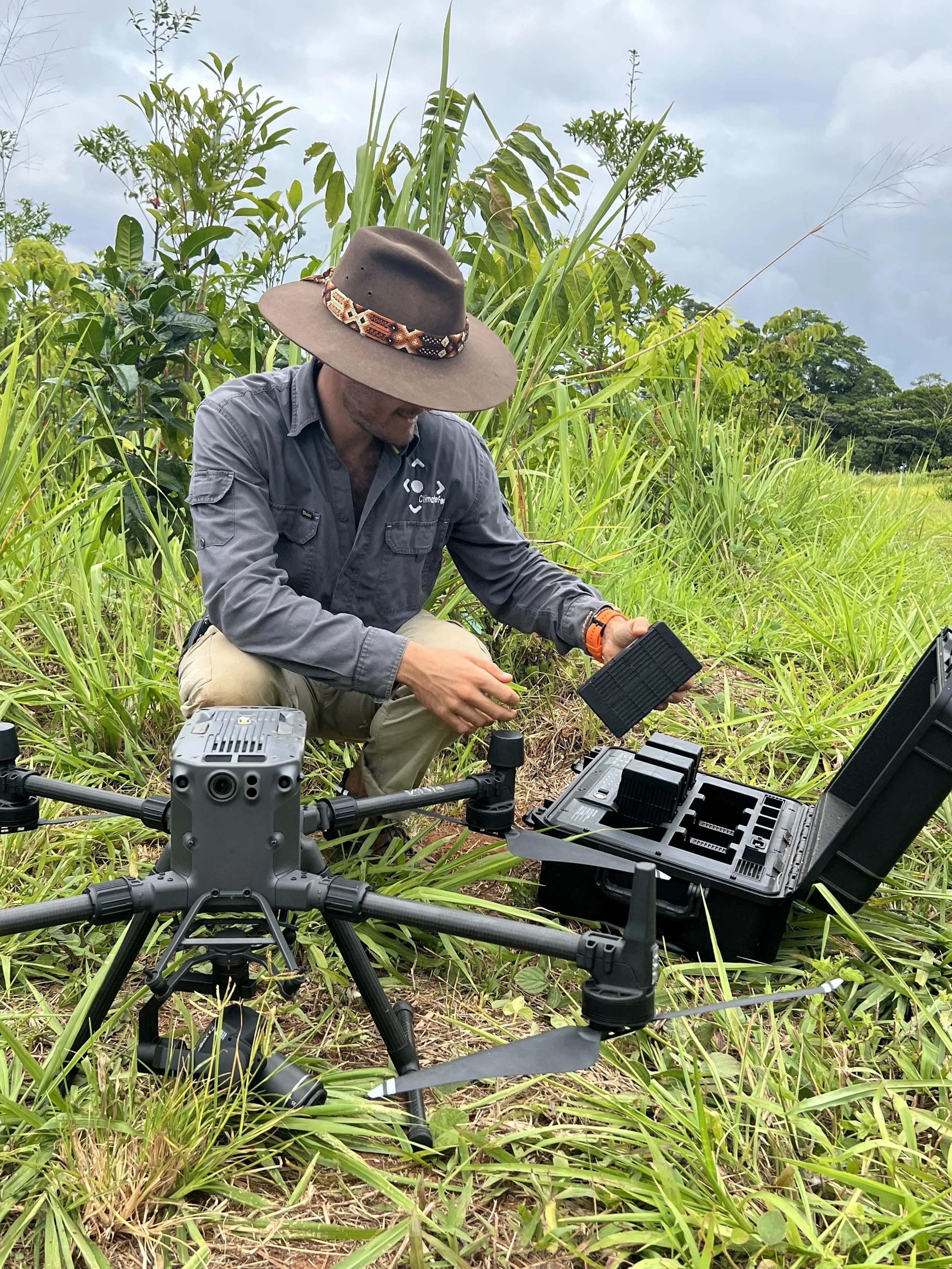
Out in the field with Jack - our Research Director, resident drone pilot, and data detective - students don’t just learn science, they walk through it. The forest becomes their lab. Every tree, trail, and planting row holds a story, waiting to be revealed.
They start by flying drones over restoration zones, capturing high-resolution imagery and learning how to stitch it into orthomosaics and canopy height models. Jack shows them what it takes to geotag trees, measure growth, and monitor change not just with their eyes, but with pixels, coordinates, and code.
Then the questions begin. Which species are thriving? How does shade affect survival? What planting patterns lead to the fastest canopy closure? Students dig into the data, compare zones, and begin to see patterns emerge - living systems turning into measurable insights.
Some days are field-heavy - measuring trunk diameters, checking tags, syncing drone data. Other days, it’s laptops in the shade - analysing trends, visualising growth curves, and getting curious about outliers.
Throughout it all, one truth becomes clear: this is real science - applied, evolving, and essential. They’re not spectators here. They’re co-investigators. And when they realise the models they’re building could help shape the next generations of rainforest recovery - the future of how we do restoration across the tropics - it hits different.
Evenings by the Fire – Listening, Learning, Belonging
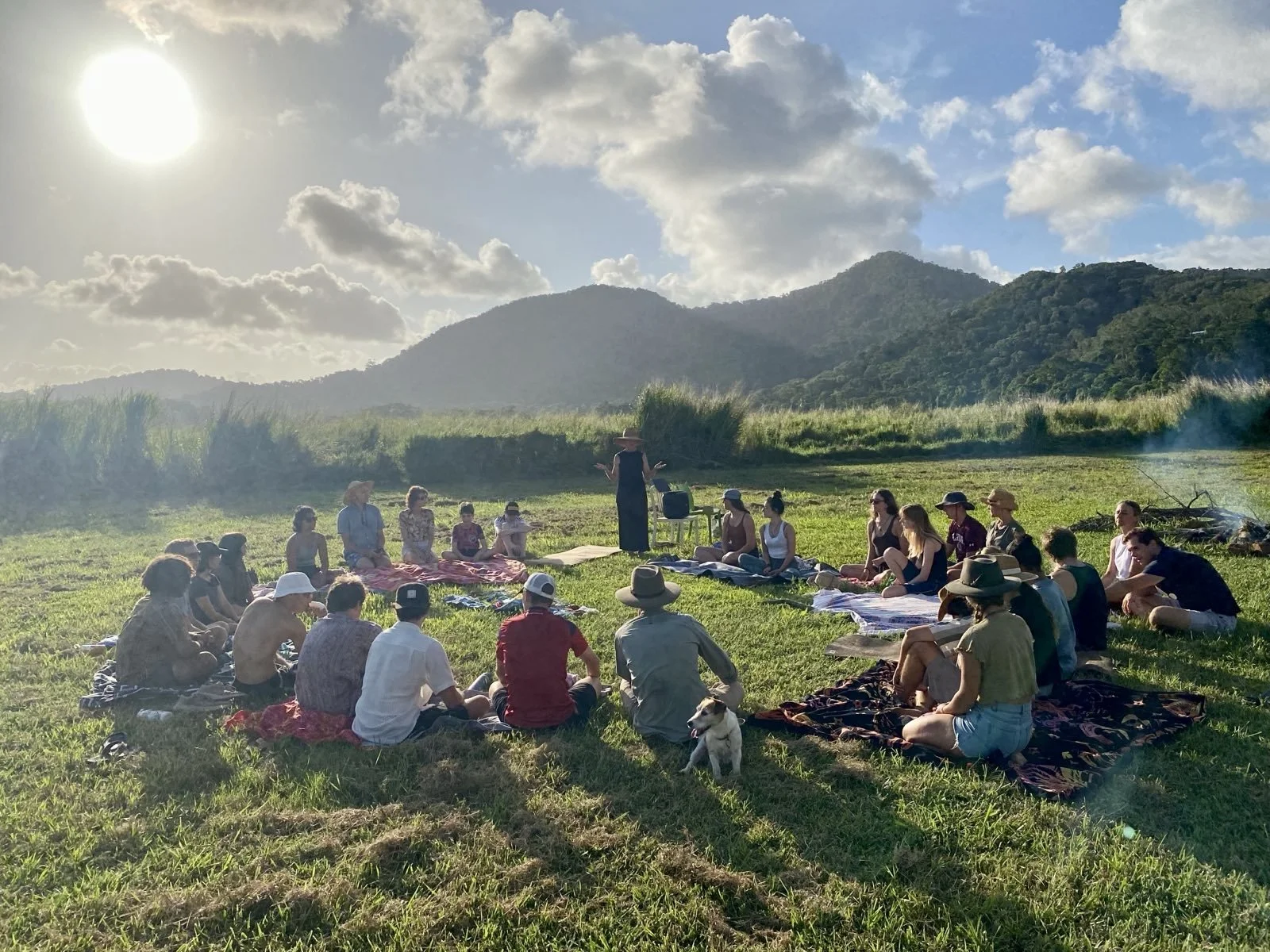
Some lessons don’t come from books or tools. They come from silence, story, and the flicker of firelight. As the sun dips and the forest quiets, students gather in a circle - not for an activity, but for something older and deeper. Yarning circles begin.
Facilitated by local Aboriginal elders and knowledge holders, these evenings are not performances. They are moments of truth. Ceremony. Spaces where stories are passed down, not just to be heard, but to be felt. Students listen to stories tied to the land they have been walking and living upon. They hear about seasons, songlines, and the deep relational responsibility embedded in Country. They ask hard questions - about colonisation, land rights, loss, and healing.
And they receive answers that don’t come in bullet points, but in lived experience, laughter, and sometimes, quiet tears. Some nights, it’s heavy. Other nights, it’s joyful. Always, it’s human.
For many, it’s the first time they’ve sat still long enough to truly listen. To recognise that this work - this planting, this caring - is part of a much older continuum. And that to regenerate land, we must also re-weave culture, honour story, and build relationships rooted in respect.
By firelight, education softens. It becomes something we carry - not just in our heads, but in our hearts.
Earth-Centred Youth Leadership in the Making
Not all learning happens on the land. Some of it comes from the water, from movement and from moments of awe.
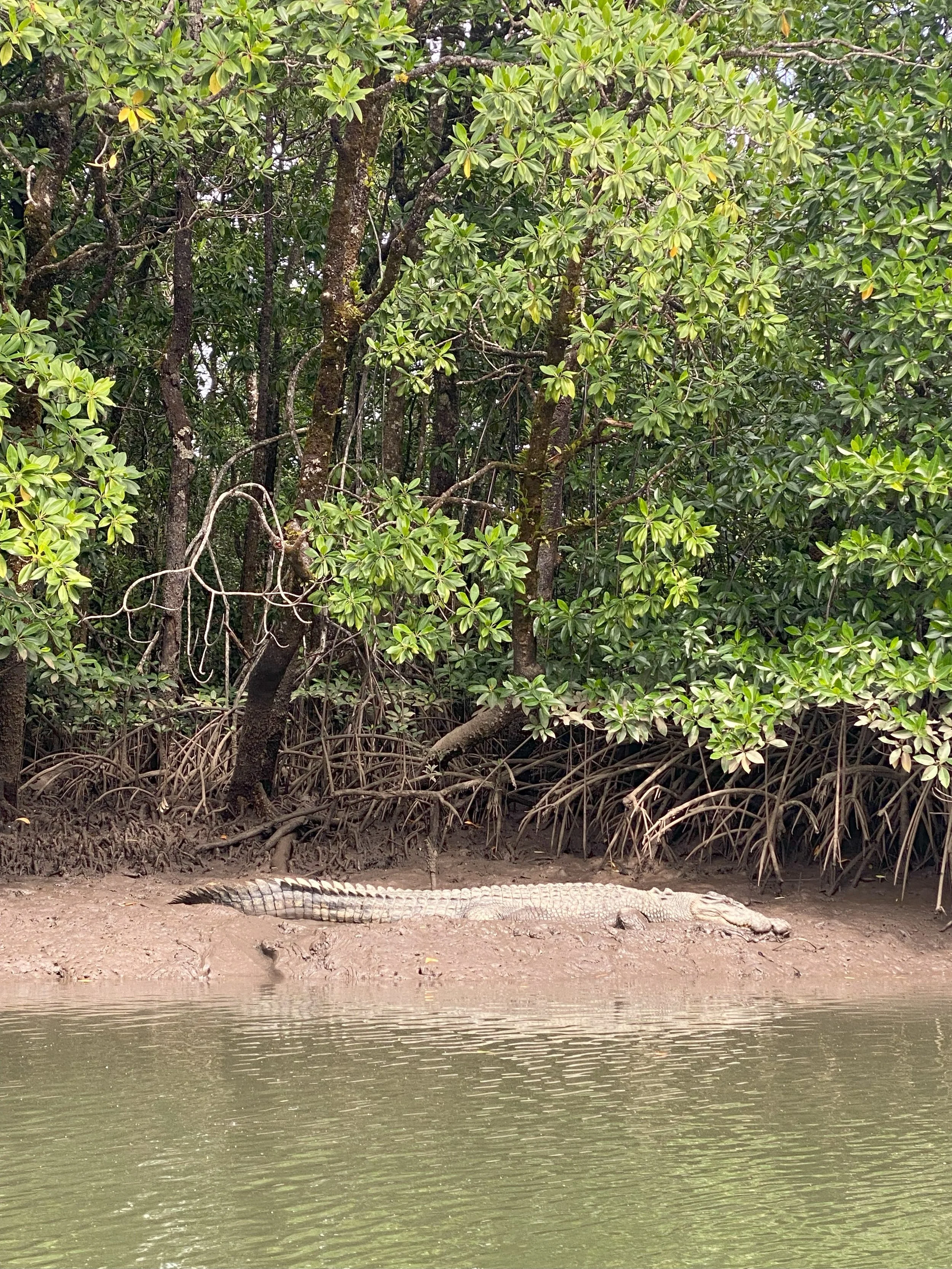
During the camp, students head out beyond the planting rows and the nursery. They drift along the creek with local guides and travel through mangrove estuaries on crocodile cruises, learning about tidal systems, salt-tolerant plants and an apex predator whose lineage outlasted the dinosaurs. It is wild, raw and unforgettable.
They also walk through Mossman Gorge, with its clear rivers, ancient granite boulders and towering rainforest cared for by Eastern Kuku Yalanji people for millennia. It is less a lesson in ecosystems than a moment of reverence, a reminder of what remains intact and why it needs protecting.
Then there are the beach cleanups. They are neither glamorous nor filtered, just a group of young people with gloves, buckets and a sense of purpose, combing the shoreline and seeing first-hand how far plastic can travel.
These experiences round out the week, balancing action with perspective. They give students the chance to step back, to feel part of a larger system and to see how human choices ripple across land and sea.
What happens after they leave tells the real story. Some find clarity, others confidence. All leave with a deeper understanding that they are not powerless. In a time weighed down by climate anxiety, these camps offer something rare and real: a sense of agency, belonging and hope that stays with them.
Once you have walked through rainforest, helped restore a clearing, floated past crocodiles and stood barefoot in a sacred gorge, you begin to realise that leadership does not start in policy rooms.
It starts here.
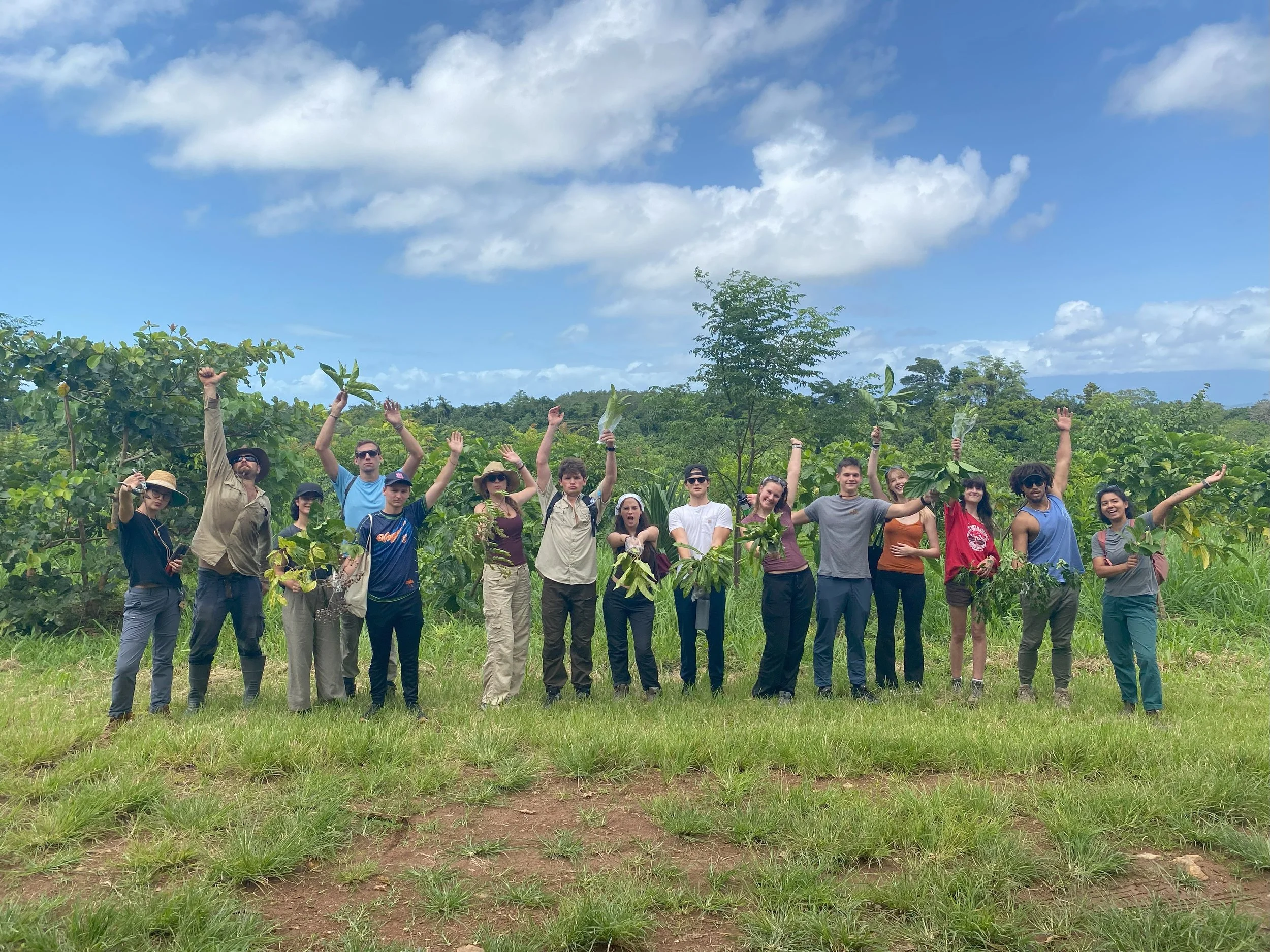
Want to Be a Part of This?
If you are an educator, student, parent or program organiser looking for an authentic, hands-on learning experience grounded in regeneration, we would love to hear from you.
Together, we can support and nurture the next generation of Earth stewards.
If you’re interested to
- Book a youth camp or custom group experience
- Support a scholarship for under-resourced students
enquire at:
support@climateforce.au
