
Beyond the Mill Era: Growing Green Jobs and Regeneration in Douglas Shire
“Jobs don’t have to cost the Earth - they can restore it. And they can keep our people rooted in the place they love.”
Douglas Shire stands at a crossroads.
The closure of the Mossman sugar mill has rippled through the region, ending an era and leaving many local families facing deep uncertainty. Hundreds of direct and indirect jobs tied to the cane industry are now in doubt. The effects reach everyone, from mill workers and council to small businesses and farmers unsure what the next season will bring.
This is a cultural moment as much as an economic one, and it leaves the region with a pressing question:
Where do we go from here?
Young people could drift away in search of work elsewhere. Or the community could hold together and put down new roots, this time with a regenerative future at the forefront. Now is the time to turn a forced transition into a positive transformation, and that begins with jobs: real, locally rooted green jobs that drive the regional economy.
A Moment of Risk - and Regenerative Opportunity
Cane and cattle have shaped this region. They have provided livelihoods, fed families and built community for generations. Times are changing, though. Markets are shifting and climate pressures are rising, and across Douglas Shire thousands of hectares of cane land now face an uncertain future, along with the chance to grow new ideas and new livelihoods.
The aim is not to replace the past but to diversify the future.
Regenerative land use offers a way to do that. It is a way of caring for Country that protects ecosystems while also producing food, supporting people and building economic resilience.
From Land to Livelihood: What Land Diversification Looks Like
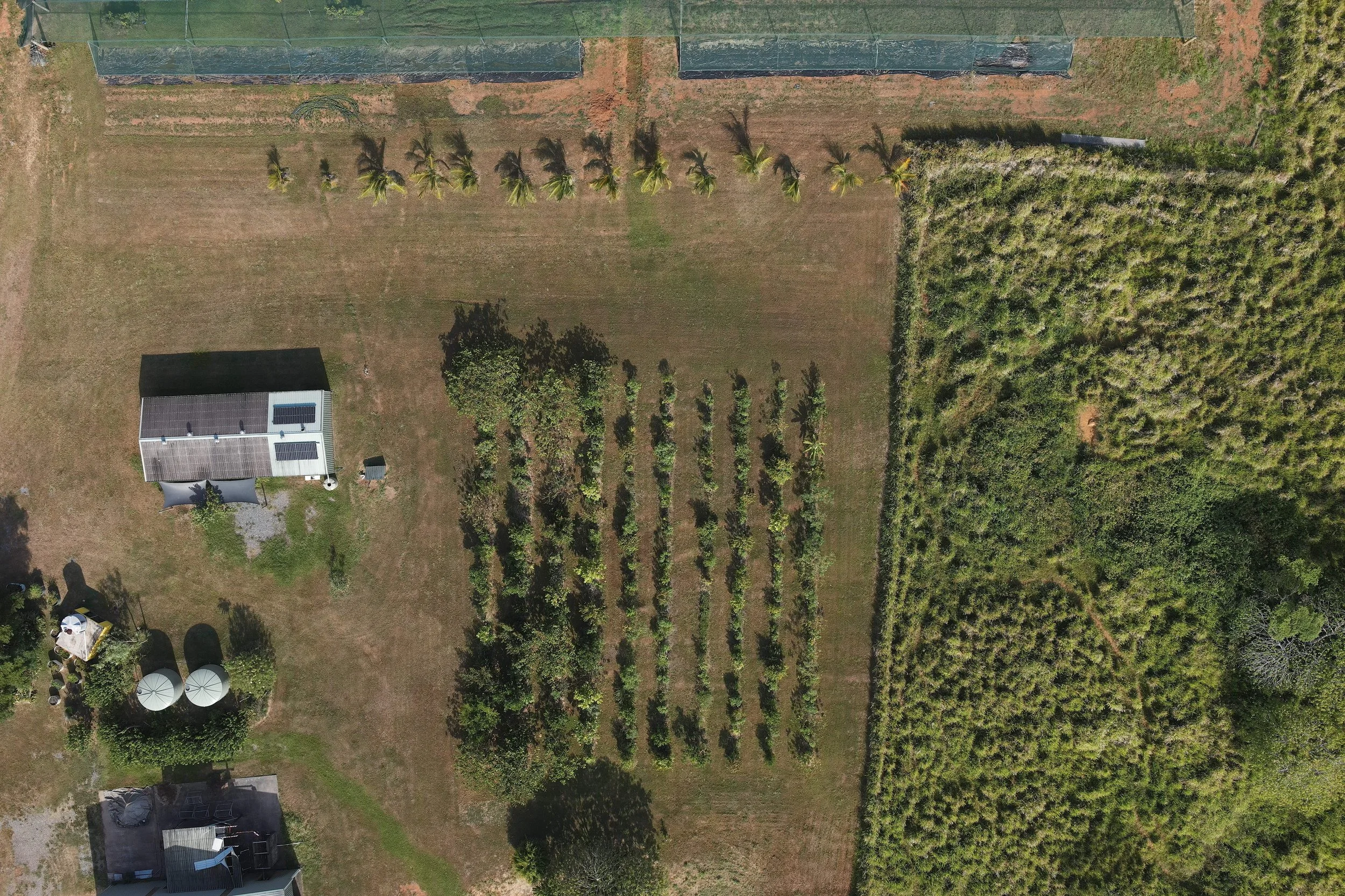
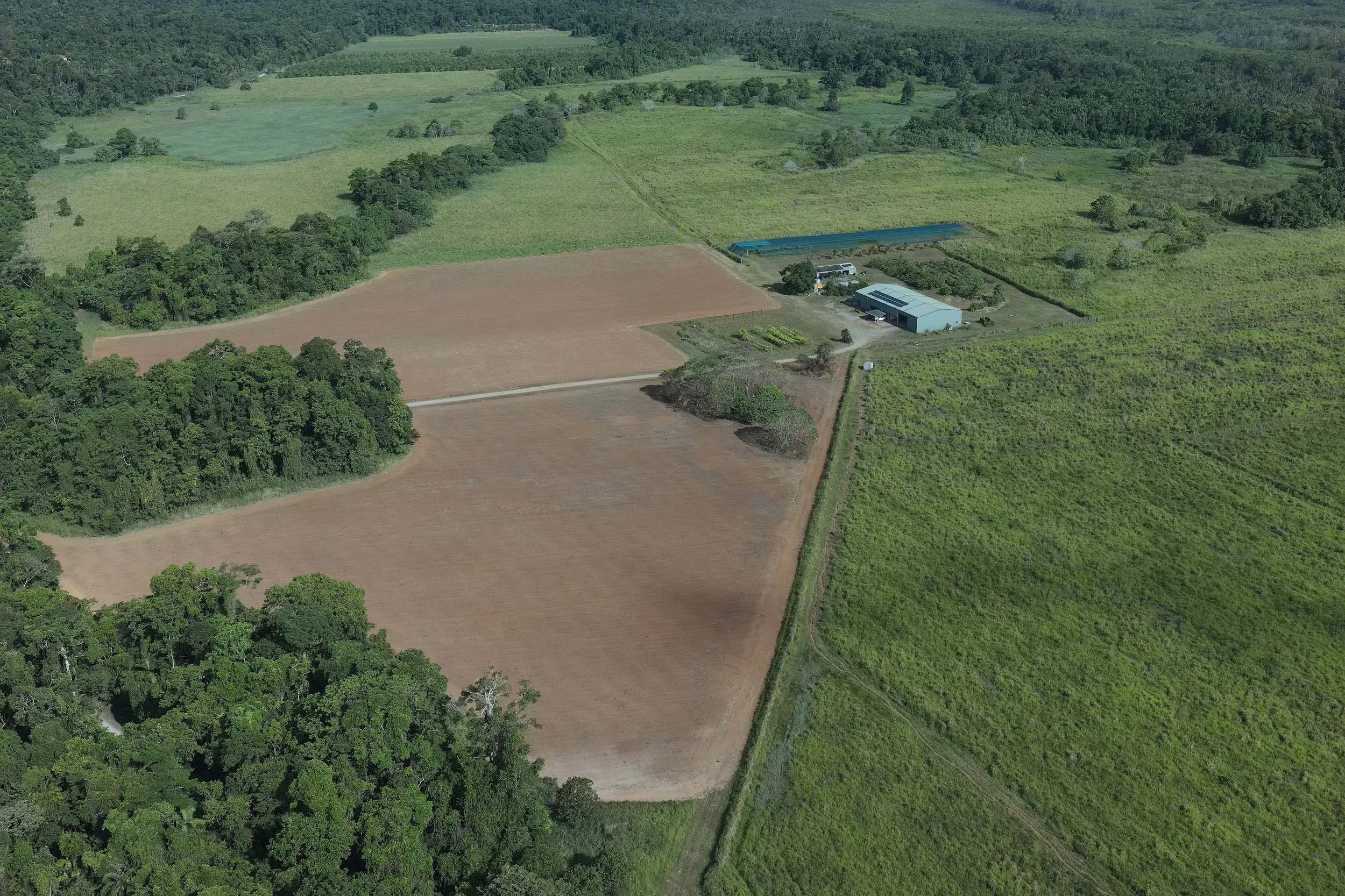
At our research station, we are developing a hub for land diversification methodologies, systems that open up new possibilities for rural and rainforest-fringe land.
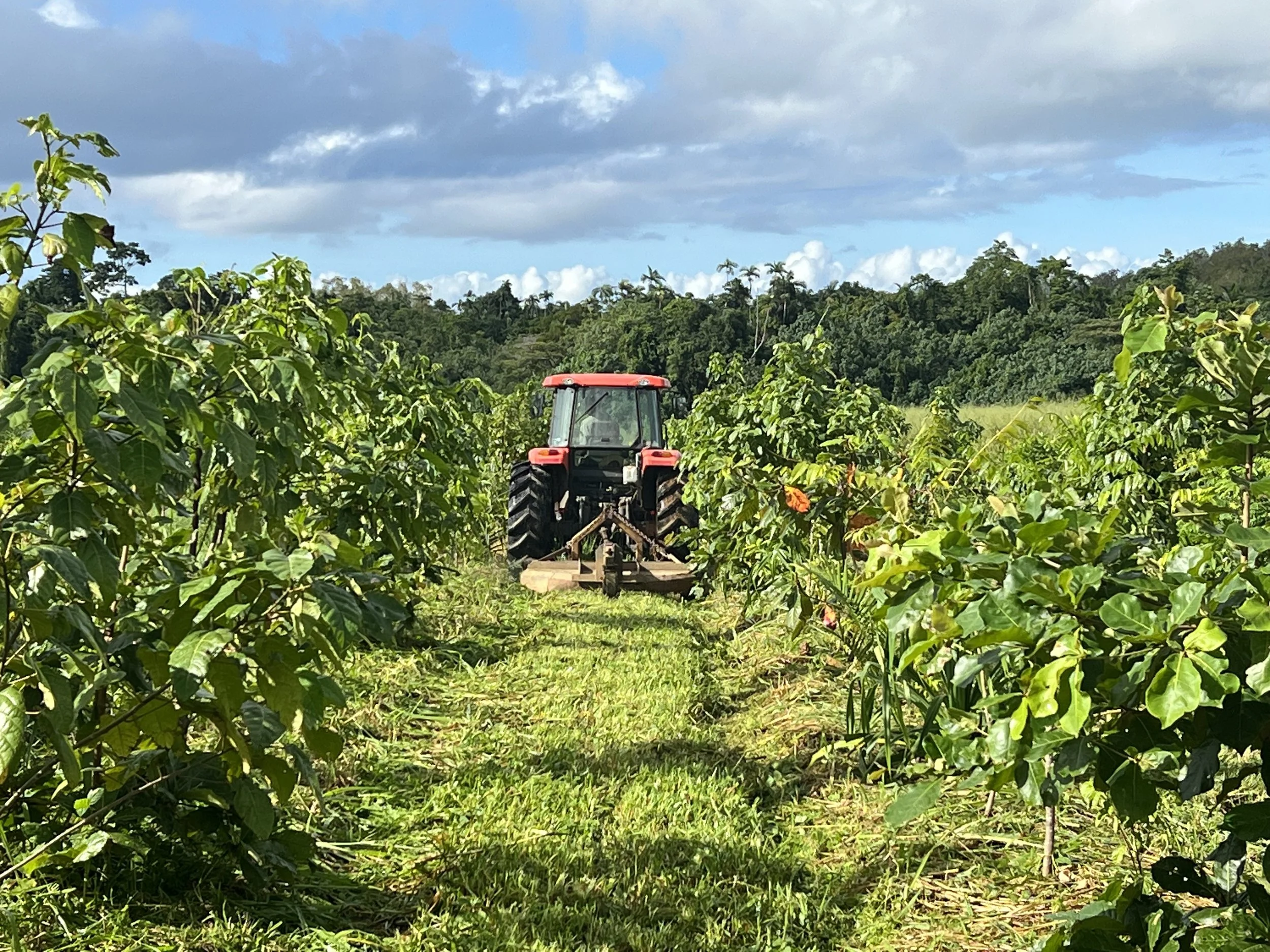
On the ground, this takes three main forms. Native rainforest regeneration restores ecological function and biodiversity through strategic planting, soil improvement and canopy development. Blended systems combine native trees with edible and medicinal plants, delivering both environmental and economic returns. High-yield agroforestry systems grow marketable local crops such as bushfoods, tropical fruits, timber and essential oils.
All three are already being implemented and trialled across our 213-hectare pilot site, with scalability in mind. Each requires planning, planting, monitoring and management, which means each requires people: skilled, committed people who want to work with natural systems rather than against them.
So what do green jobs actually look like in Douglas Shire?
These roles take many forms. Nursery staff sow seed for the next generation of forest, and land managers regenerate degraded ground. Camera trap monitors, drone pilots, carbon modellers and cultural educators track and share the work, while trained agroforestry workers harvest fruit, food and knowledge from healthy land.
ClimateForce currently employs six core staff, with seasonal support during the wet season and a rotating team of committed volunteers. This is only the beginning.
We are already talking with cane farmers about applying these methods on their own land. We are working with Jabalbina Yalanji Aboriginal Corporation to explore how land diversification could support their project areas, and with Terrain NRM to engage local farmers and share knowledge across sectors.
The foundations are in place. Growth from here will come through community training and wider access to these opportunities.
Training for a Regenerative Economy
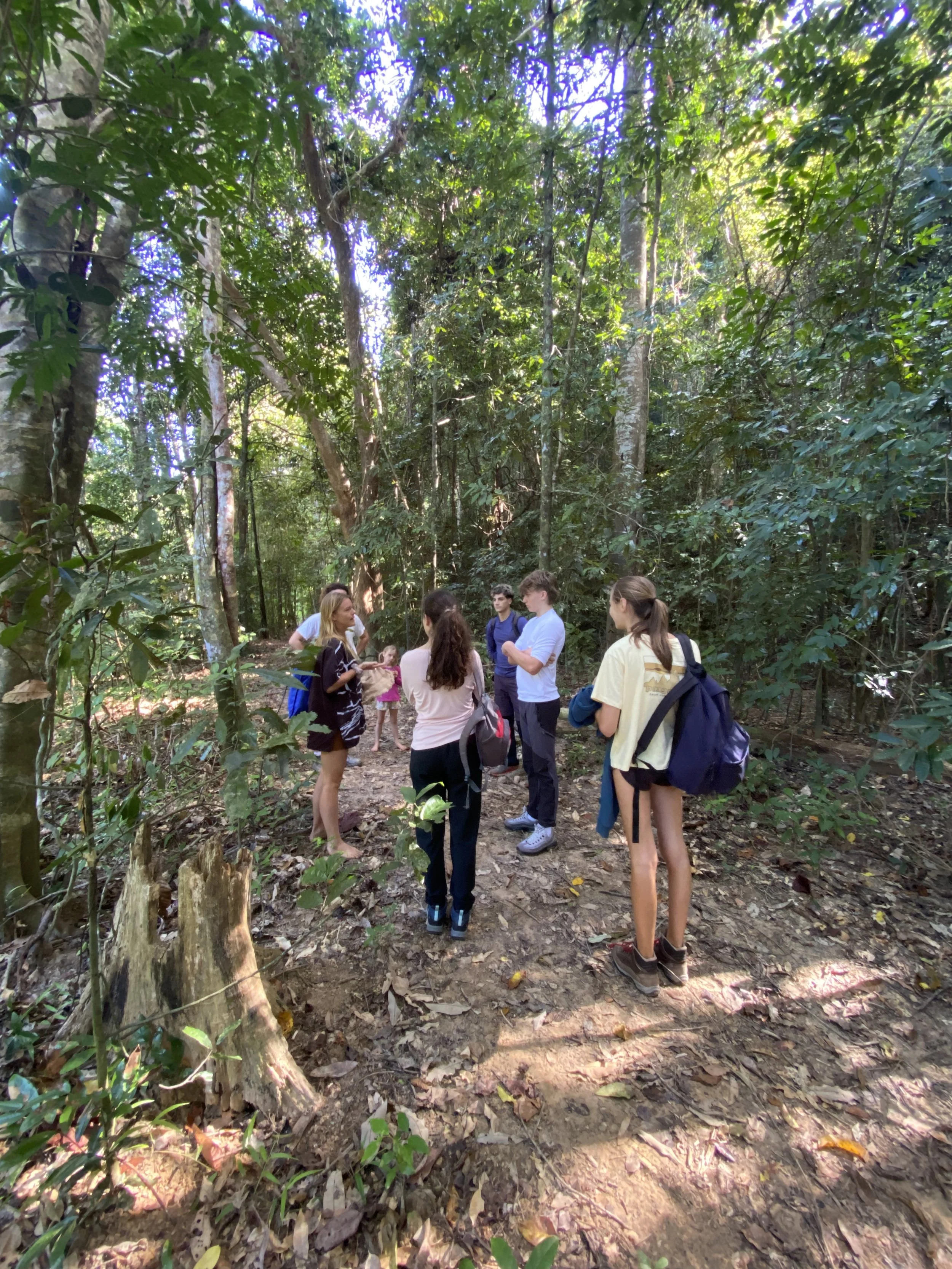
Good ideas are not enough on their own. People need the tools and training to put them into practice. That is why ClimateForce plans to host a series of workshops and open days offering hands-on learning in:
- High-yield agroforestry systems
- Broad-acre blended regeneration/production systems
- Pure native rainforest restoration
- Organic land certification support
- Ecological monitoring and data collection
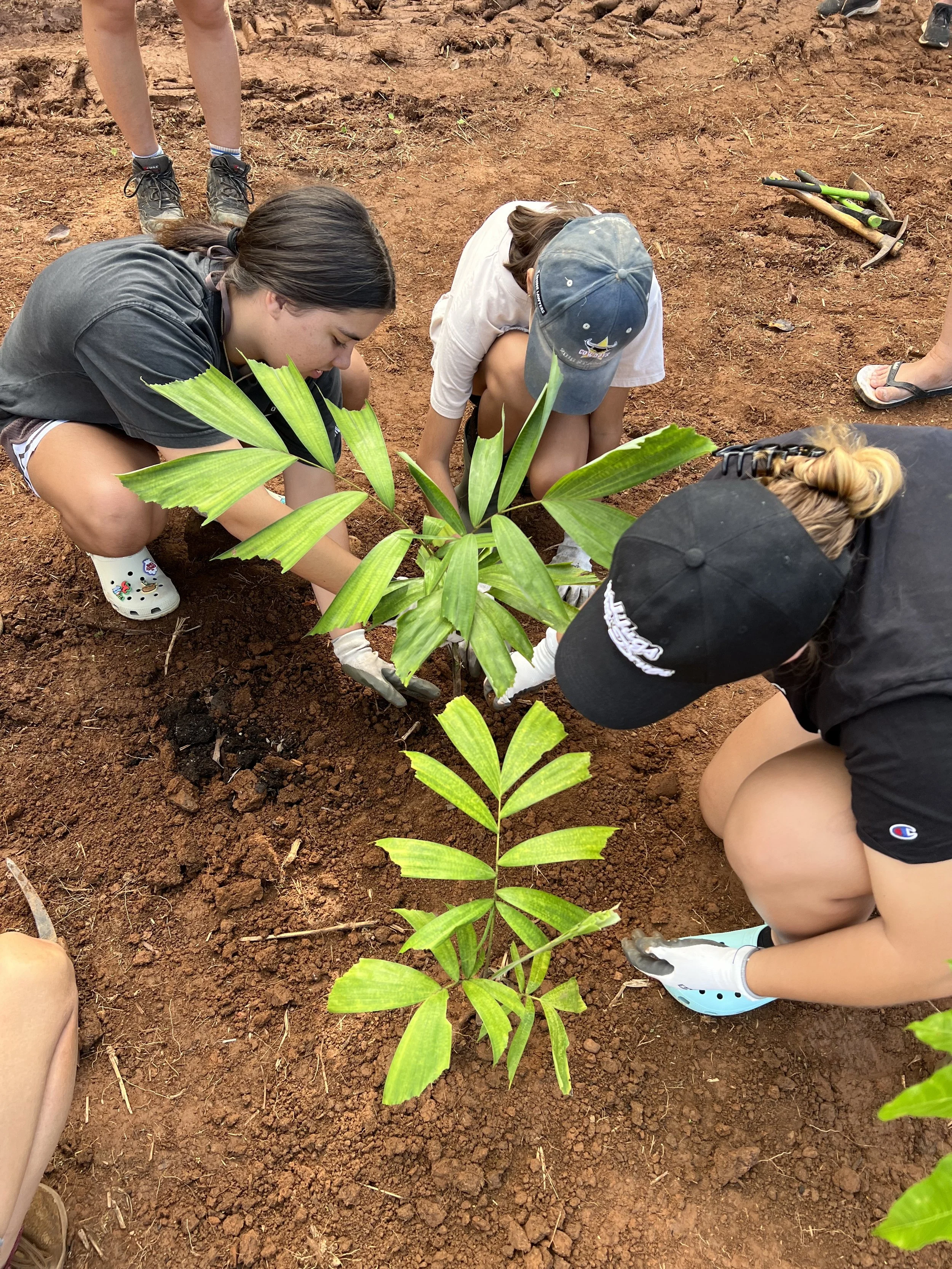
We are building partnerships with local educators, Traditional Owners and regional institutions to deliver regenerative training on Country. Our youth education camps are already giving young people practical experience through tree planting, cultural exchange and ecological skill-building, laying the groundwork for the next generation of land stewards.
This Is About More Than Jobs
This is about identity and connection to place. It is about making it possible for people to stay, thrive and lead in Douglas Shire, rather than getting by on shrinking economic returns.
It is also about resilience in the face of climate change, market volatility and environmental degradation. Diversifying land use spreads risk and builds strength into the community at every level.
Regenerative land management is neither charity nor a fringe movement. It is a practical, economically sound and hopeful response to a changing world. It keeps money circulating locally, strengthens food systems and brings cultural knowledge back to the centre. It reduces fire risk, improves soil health and increases biodiversity. Above all, it brings people back to the land with a sense of purpose.
“The closure of the cane mill signals a chance to rethink land use across Douglas Shire. This is about more than ideas - it’s about land-based outcomes. Repurposing old cane land into diverse, resilient uses can support both reef and rainforest, while creating real value for the region and future generations.”
- Barney Swan, ClimateForce Founder
Let’s Grow What’s Next - Together
No one is asking anyone to walk away from their roots. The question is what else can grow from them.
The future of Douglas Shire does not rest on a single crop, industry or pathway. It rests on many hands, many minds and many methods working together to widen what the land and its people can achieve.
If you are a farmer keen to trial new crops, a teacher interested in on-Country education, a young person looking for meaningful work or a landholder unsure where to begin, get in touch and come along to one of our workshop days.
There is a place for you in this growing story.
