
The Heart of Regeneration: Building Community
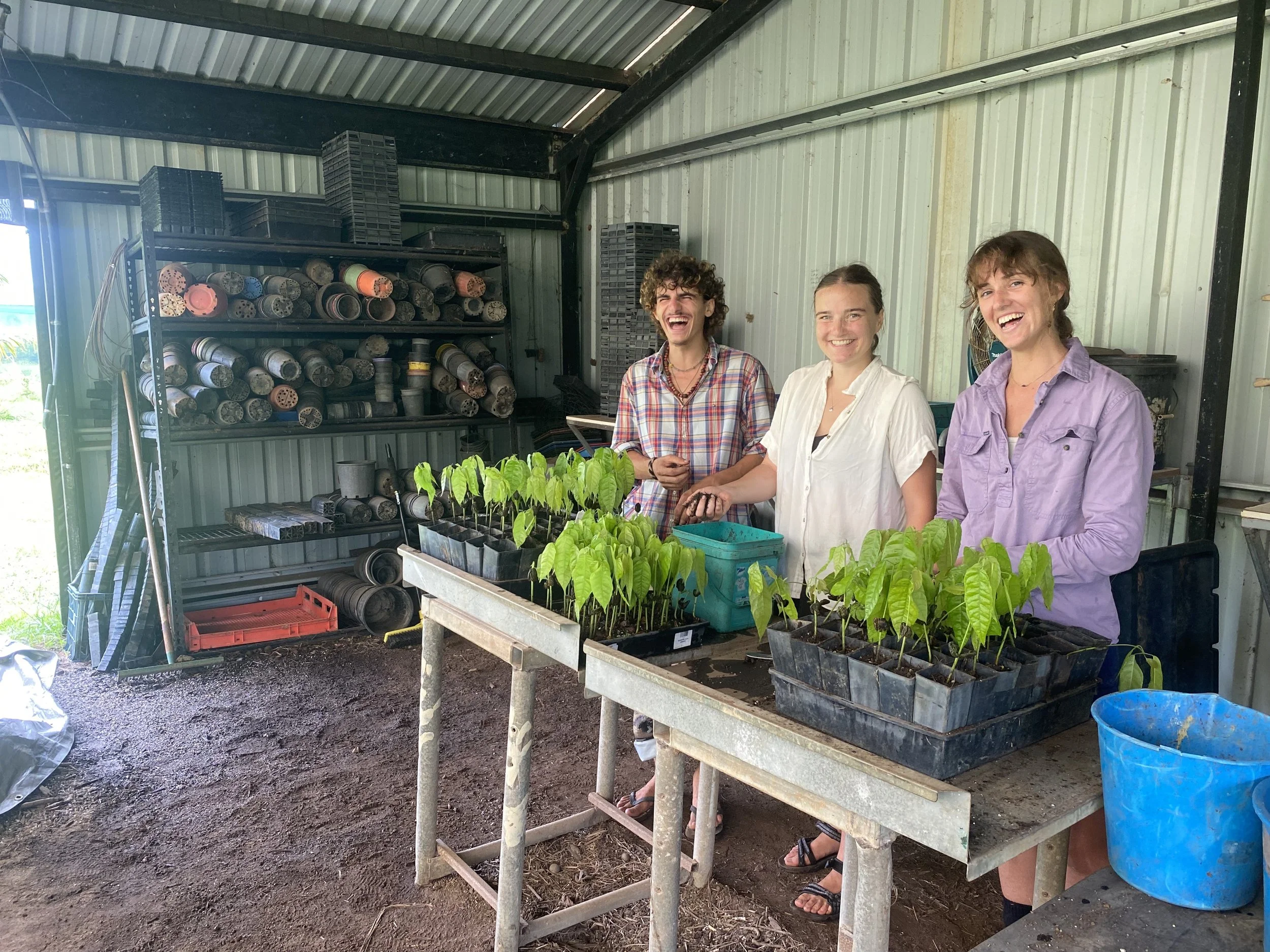
In the nursery, laughter mixes with focus as volunteers further the life of nurtured seedling trays - cultivating cacao for our ever expanding food forests.
At ClimateForce, our work spans two interconnected restoration pathways.
In some areas, we focus on 100% native rainforest regeneration, prioritising ecological integrity, biodiversity recovery, and the re-establishment of resilient rainforest structure. In other areas, we design blended restoration systems, where native rainforest species are interwoven with high-value agroforestry crops such as cacao, durian, cempedak, and other tropical fruits.
Both approaches are grounded in restoration science. Together, they allow us to regenerate land while creating long-term economic pathways that support people, stewardship, and enduring protection of restored landscapes.
A Shared Vision for Regeneration
At ClimateForce, we believe that the heart of restoration lies in its people. The rainforest teaches us that diversity creates resilience — and the same is true for communities.
Every hand that joins our work adds new strength. Every story shared around the fire, or under the shade of a young tree, adds another thread to the tapestry of regeneration we’re weaving across the Daintree Rainforest and Douglas Shire.
Regeneration, to us, is both ecological and social. It is the act of rebuilding ecosystems while also rebuilding the capacity of people to care for them — together. It’s about rediscovering the bond between people and place, and finding balance not only within the forest canopy, but within the human spirit too.
What We’ve Grown So Far
Community Plant-Out Days
Over the past few years, nine dedicated plant-out days across four planting zones have seen more than a hundred community members help return thousands of native trees to the ground. From the first three stages of Plant Out 1 through to our most recent Plant Out 4, each event has been a living expression of teamwork: hands in the soil, smiles across faces, and a shared knowing that something meaningful is taking root.
These gatherings are important moments of reconnection. People come not only to plant, but to learn about native species, understand the impact of ecological restoration, and experience what it means to nurture land collectively.
When the last tree goes into the ground, there is always a moment of quiet pride — and a shared understanding that regeneration is as much about belonging as it is about biodiversity.
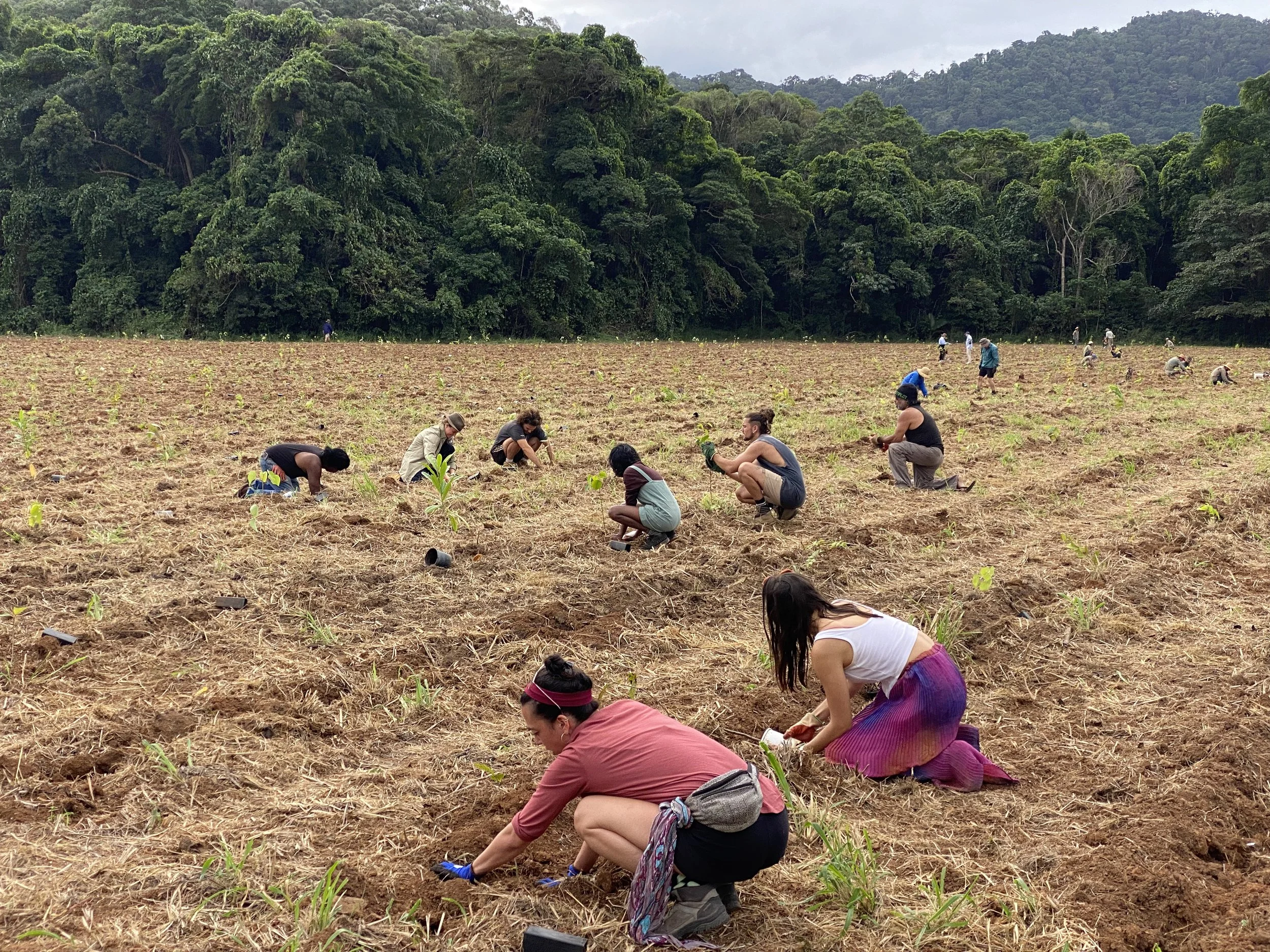
Community members planting native rainforest seedlings during Plant Out 4, working side by side to restore biodiversity and strengthen ecological impact across the site.
Learning Through Doing
For the past three years, our educational programs have brought groups such as Carpe Diem and other private camps to the Daintree for immersive, week-long experiences. Students engage deeply with our living laboratory, learning about soil health, seed propagation, biodiversity monitoring, and the design of blended agroforestry systems that restore rainforest structure while producing food for people and wildlife.
The rainforest becomes the classroom, and the lessons are tangible. Participants witness young trees enduring dry season heat, smell compost transforming into rich humus, and watch butterflies return around the new growth trees.
These experiences demonstrate that restoration can be both ecologically rigorous and economically viable - a vital condition for scaling regeneration across working landscapes. Each visit sparks curiosity, stories, and new ambassadors for the rainforest and the wider natural world.
Volunteers: The Lifeblood of Our Work
Hundreds of volunteers have passed through our gates over the past four years. Some stay for a few days, others for months — immersing themselves fully in the rhythms of the Daintree. Together, they have supported every layer of our work: from nursery operations and seed processing, to field planting, data collection, organic weed management, and ongoing monitoring across our restoration zones.
For many, volunteering becomes a way of slowing down and reconnecting - with land, with community, and with purpose. Days are shaped by the weather and the forest itself: early starts, shared meals, muddy boots, and the embraced satisfaction of seeing seedlings take hold. Each contribution, no matter how small it may seem in the moment, becomes part of a much larger regenerative story.
While most visitors arrive during the dry season, those who come in the wet experience the rainforest in its most raw and powerful form. Creeks swell, cicadas hum, the canopy thickens, and renewal unfolds in real time. Working through rain and humidity offers a deeper understanding of resilience - both ecological and human.
Many volunteers leave with a transformed perspective on their role in caring for the planet. We feel it too. Each person brings fresh energy, ideas, and insight, and leaves behind something lasting in the landscape. Their presence is a constant reminder that regeneration is not a solitary act, but a shared endeavour - carried forward through collective effort, care, and connection.
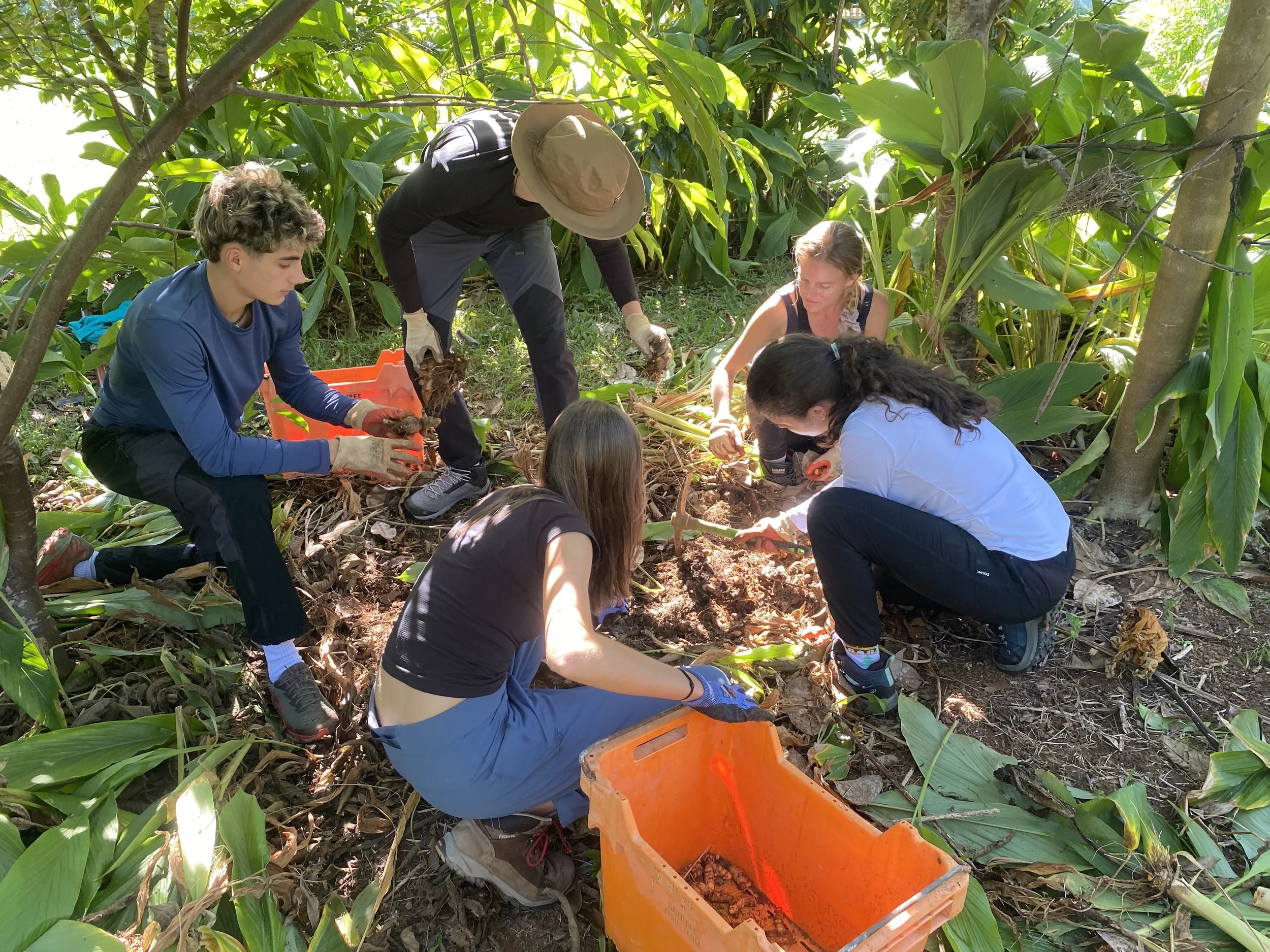
Volunteers harvesting turmeric grown within our fruit planting rows — a living example of how food production and ecological restoration can work hand in hand.
Conversations Around the Fire
Periodically, our community gathers around the fire as evening settles over the forest. Local Elders, youth, volunteers, and visitors sit together beneath the Daintree’s star-filled sky, sharing stories, songs, and quiet reflections shaped by land, memory, and lived experience.
These gatherings create a different kind of space, an opportunity for time time slow, voices soften, and listening becomes as important as speaking. Stories of Country, of past and present, weave together with laughter and silence, reminding us that regeneration is not only physical work carried out during daylight hours, but something cultural, emotional, and deeply human.
The firelight illuminates more than faces. It reveals relationships forming, trust deepening, and a shared sense of purpose taking root. In these moments, learning happens organically through presence, respect, and connection rather than instruction.
These evenings anchor our work, reminding us that caring for land also means caring for one another, and honouring the stories that guide us forward.
Welcoming the Wider Network
Our open days with organisations such as the Australian Land Conservation Alliance (ALCA) and the Wet Tropics Management Authority (WETMA) have strengthened collaboration, trust, and shared learning across Far North Queensland. These gatherings create meaningful opportunities for local farmers, researchers, landholders, Indigenous representatives, and state and federal organisations to come together on the ground.
By welcoming a diverse mix of practitioners, decision-makers, and knowledge holders onto our site, we open space for genuine exchange where lived experience, scientific insight, cultural knowledge, and policy perspectives can meet. Conversations unfold while walking the land, observing planting designs, discussing monitoring outcomes, and sharing challenges faced across different land-use contexts.
These open days allow participants to explore how pure native rainforest regeneration and blended restoration–agroforestry systems can function as complementary tools for large-scale landscape repair. Farmers and landholders can engage with models that balance ecological restoration with economic resilience, researchers can test and refine ideas in real-world conditions, and Indigenous voices help guide conversations grounded in long-term care for Country.
Through this shared presence, partnerships deepen and new collaborations emerge. What begins as a site visit often evolves into ongoing dialogue, joint learning, and collective action, strengthening a regional network committed to restoration approaches that are ecologically sound, culturally respectful, and capable of enduring across generations.
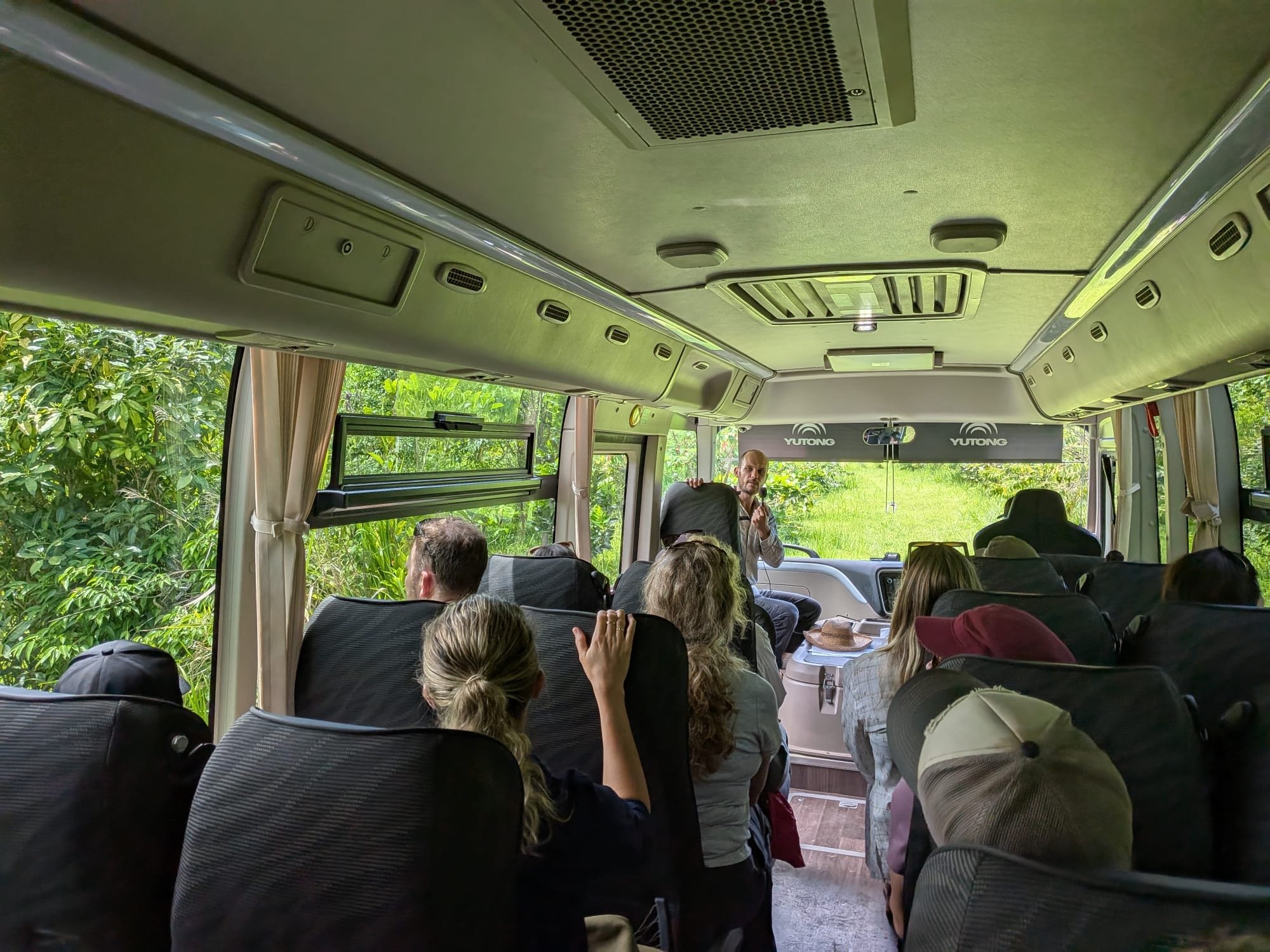
Guests on an immersive bus tour through our Plant Out areas, travelling between paddocks while hearing from Research Director Jack about current findings, monitoring outcomes, and active restoration trials on the ground.
What’s Next: Growing Capacity Together
Volunteer Open Days
From the new year, we’ll be hosting occasional half-day open sessions combining guided tours with hands-on activities. Visitors will gain insight into our full restoration journey, from seed collection and nursery work to field planting and sharing about our agroforestry systems.
For those unable to join us on-site, there will be meaningful ways to contribute remotely, including documenting progress, sharing stories, or assisting with light data and communications work.
Workshops and Skill-Building
We are developing a calendar of practical workshops covering native rainforest regeneration, blended food systems, food sovereignty, organic weed management, seed collection, nursery development, and applied research methodologies. All knowledge sharing grounded in lessons learned on the land.
Through these offerings, we look to involve others in our processes, equipping farmers, landholders, students, and community leaders with the confidence to apply regenerative principles in their own contexts.
Looking Ahead with Hope
The forest teaches patience. Growth takes time, care, and collaboration. Each seedling planted, each story shared, and each person who joins us brings us closer to a thriving, resilient ecosystem.
Regeneration is not a project with an end date. It is a living relationship built on trust, connection, and shared effort. As our community grows, so too does the planted forest - each reinforcing the other in a cycle of mutual renewal.
We are deeply grateful to everyone who walks alongside us: the volunteers who rise with the sun, the students eager to learn, the Elders who share wisdom, and the partner organisations who lend their strength. Together, we are showing that the future of restoration rests not only in innovation or resources, but in relationships, care, and a shared commitment to the Earth we all call home.
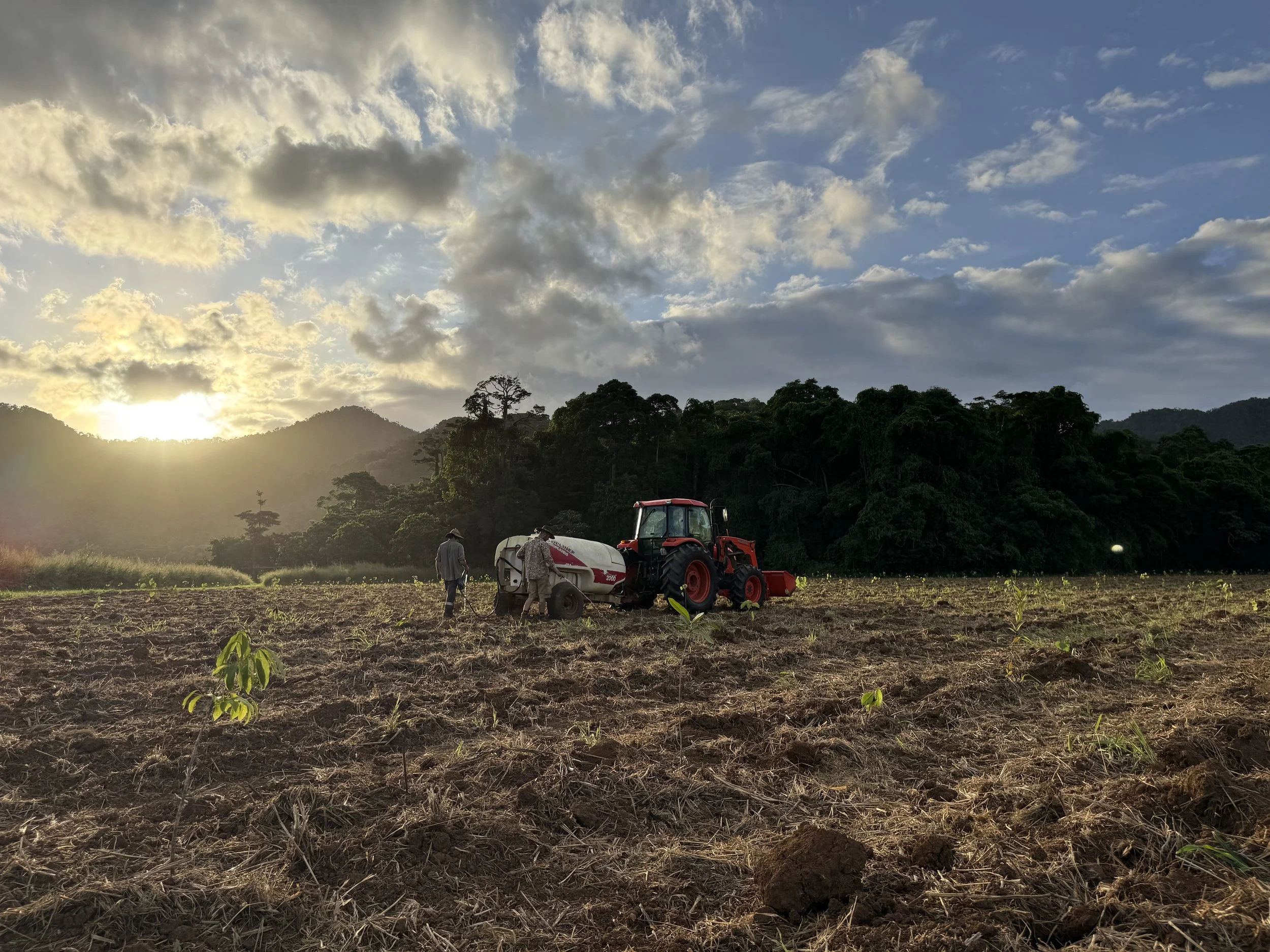
A moment of care in the Plant Out 4 paddock, as newly planted trees receive their first watering and begin their journey in restored ground.
Stay Connected
Follow our journey as the forest and community grow side by side.
Instagram: @climateforce.360
Facebook: facebook.com/climateforce
Join us for upcoming open days, workshops, and stories from the field.
